Fix Black border or bar on Monitor

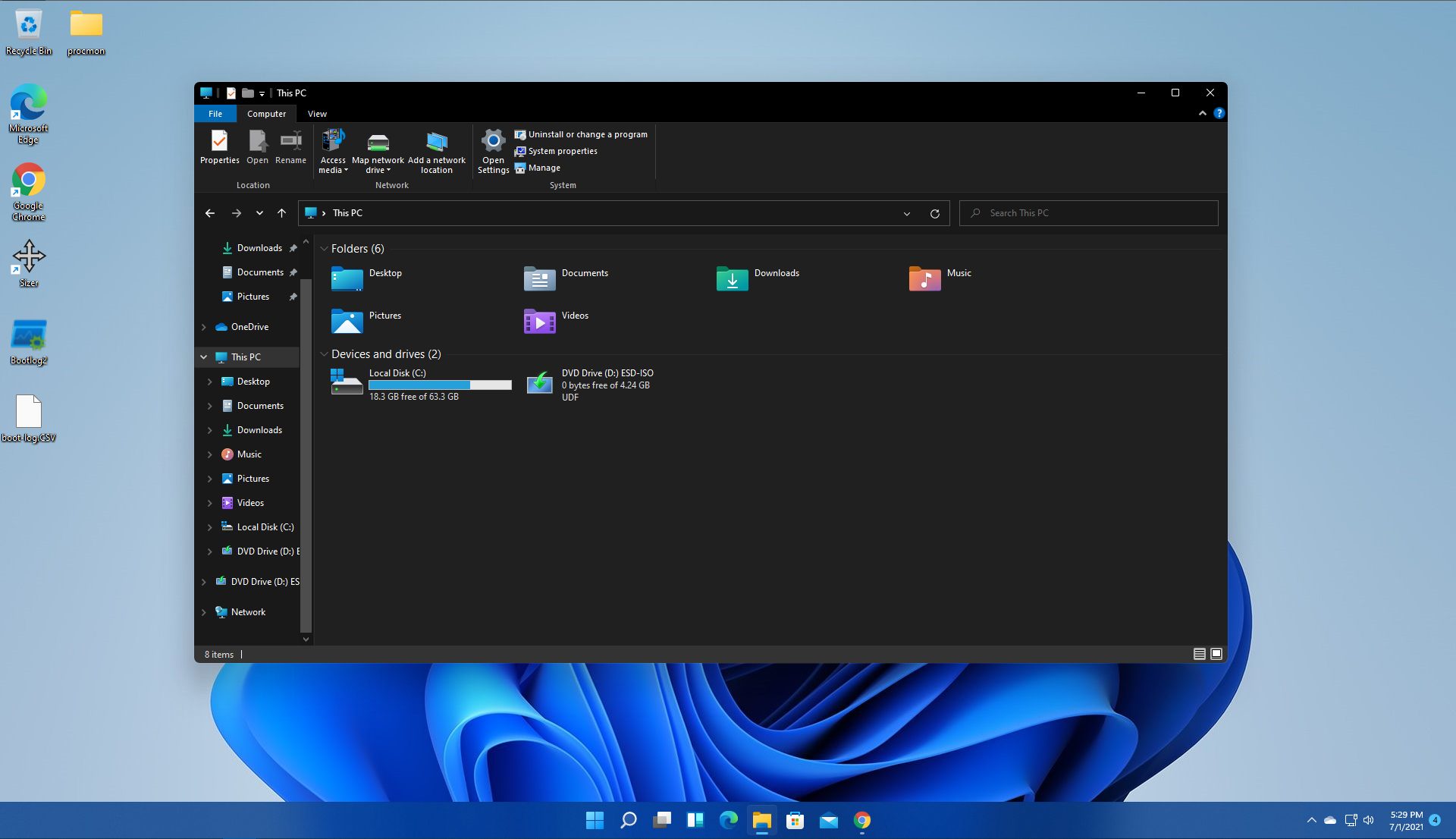
If you suddenly see a black border in your computer’s display then you might be wondering how come this happened but worry not for this post will give you a couple of suggestions that could help you resolve the problem.

The black bar could appear at the bottom or just the sides of the screen. Whichever it may be, there are options you can check out. Refer to the options givens below and make sure to follow them carefully.

Option 1 – Try checking the screen resolution

You might want to try checking the resolution of your screen.

  • Open the Windows 10 Settings and go to Display.
  • Next, go for the “100% (Recommended)” option under Scale and layout for the size of the text, apps, and other items.
  • After that, select the Recommended setting again under Resolution.

Now check to see if the black bars are still there. They should be gone at this point, but if for some strange reason nothing has changed, then attempt the steps below.

Option 2 – Try updating Graphics & Monitor drivers

You might want to try updating your graphics and monitor drivers if you haven’t updated them for some time now. To do that, refer to these steps:

  • First, boot your computer into Safe Mode.
  • After that, tap the Win + R keys to launch Run.
  • Type in devmgmt.msc into the box and tap Enter or click OK to open the Device Manager.
  • After that, a list of device drivers will be displayed. From there, look for the Graphics drivers or the Monitor drivers and then click each one of them.
  • After that, right-click on each entry and select the “Uninstall Device” option from the menu.
  • Now restart your computer.
  • After restarting your computer, go to the Settings app and Check for Updates in the Windows Update section.

Note: You can also try to roll back the graphics and monitor drivers back to their previous versions if updating them didn’t work. You can also try visiting the manufacturer’s website and download the graphics or monitor driver setup for your operating system.

Option 3 – Try to run the DISM tool

You can also run the DISM Tool as it might also help in getting rid of the black border or bar on your Windows 10 computer. Using this built-in tool, you have various options such as the “/ScanHealth”, “/CheckHealth”, and “/RestoreHealth” which could help you resolve the problem.

  • Open the Command Prompt with admin privileges.
  • Then type in the following commands and make sure to hit Enter right after you type each one of them:
    • Dism /Online /Cleanup-Image /CheckHealth
    • Dism /Online /Cleanup-Image /ScanHealth
    • exe /Online /Cleanup-image /Restorehealth
  • Do not close the window if the process takes a while as it will probably take a few minutes to finish.

Option 4 – Troubleshot the problem in a Clean Boot State

There are some instances that some conflicting programs installed in your computer might be the one that’s causing the Black border issue. To identify which program is causing the problem, you need to put your computer in a Clean Boot State. To do so, follow the steps below.

  • Log onto your PC as an administrator.
  • Type in MSConfig in the Start Search to open the System Configuration utility.
  • From there, go to the General tab and click “Selective startup”.
  • Clear the “Load Startup items” check box and make sure that the “Load System Services” and “Use Original boot configuration” options are checked.
  • Next, click the Services tab and select the “Hide All Microsoft Services” check box.
  • Click Disable all.
  • Click on Apply/OK and restart your PC. (This will put your PC into a Clean Boot State. And configure Windows to use the usual startup, just simply undo the changes.)
  • From there, start to isolate the problem by checking which one of the programs you installed recently is the root cause of the problem.

Do You Need Help with Your Device?

Our Team of Experts May Help
Troubleshoot.Tech Experts are There for You!
Replace damaged files
Restore performance
Free disk space
Remove Malware
Protects WEB browser
Remove Viruses
Stop PC freezing
GET HELP
Troubleshoot.Tech experts work with all versions of Microsoft Windows including Windows 11, with Android, Mac, and more.

Share this article:

You might also like

How to Stop online tracking in Browsers
It is no longer a secret that websites, social media, and other various places on WEB are tracking you and your messages and emails for keywords that they will later use to promote and serve your specific ads linked to those keywords. Altho the process is fully automated it does feel a little forced and uneasy. That is why we are bringing you this article in which we will show you how to stop website tracking in the most popular and used browsers.

SAFARI

Apple’s Safari browser gives you the option to block cross-site tracking. It also has a Privacy Report that displays all the sites and agencies that are gathering information about you. Before blocking these trackers, you may want to review exactly which sites are tracking you online and gathering information about you. Armed with this information, you may decide that cross-site tracking isn’t a huge issue for your particular browsing habits, or you may decide to avoid certain websites entirely. To access Safari’s Privacy Report:
  1. Launch the Safari web browser.
  2. In the toolbar, select Safari > Privacy Report.
  3. Select the Websites tab. This will display information about all the websites that are profiling you.
  4. Select the Trackers tab. This displays a list of all the trackers that are gathering information about you. This includes the companies that created these trackers and the number of times Safari detected these trackers during your browsing sessions.
You can also check how intrusive a particular website is by navigating to the website in question and then selecting the shield icon that appears alongside Safari’s address bar. You can then select Trackers on This Web Page, and Safari will display a list of all the trackers that are active on this particular webpage. Once you’ve seen all the websites and agencies who are tracking you, if you want to block these trackers:
  1. In the Safari toolbar, select Safari > Preferences …
  2. Select the Privacy tab.
  3. Select the following checkbox: Prevent Cross-Site Tracking.
Safari will now prevent these trackers from following you across the World Wide Web.

CHROME

As you’re browsing the web, Chrome can send a request for websites not to collect or track your browsing data. It’s important to note that this is a request, so there’s no guarantee that every website will honor the request. Frustratingly, Chrome doesn’t provide information about the websites that are tracking you online. However, we still recommend enabling this feature, as it can help minimize the number of websites that are tracking your online movements:
  1. In Chrome’s upper-right corner, select the three-dot menu icon, then Settings.
  2. In the menu on the left, select Privacy and security.
  3. Click Cookies and other site data.
  4. Find the Do not track slider and push it into the On position.
Now Chrome will send a Do Not Track request to every website you visit. Since this is only a request, you may want to take additional steps to protect your online privacy. Ghostery is a Chrome extension that enables you to view and block online trackers. After installing Ghostery, you can view all the trackers that are active on a particular website:
  1. Head to the site in question.
  2. Click the Extensions icon in the Chrome toolbar.
  3. Select Ghostery to see a list of all the trackers this extension has detected.
  4. You can block all of these trackers by selecting the Detailed tab and then clicking Restrict site.
Repeat this process for every site you visit.

MOZILLA FIREFOX

Firefox has an Enhanced Tracking Protection feature that can block all the cross-site trackers identified by Disconnect. This feature can also preserve your online privacy by blocking social media trackers, fingerprints, and crypto miners, making this a great all-arounder for the security-conscious Internet user. Enhanced Tracking Protection should be enabled by default. However, you can verify whether it’s active for your particular Firefox installation by navigating to any website. Next, click the little shield icon that appears alongside Firefox’s address bar and you should see a message confirming that Enhanced Tracking Protection is enabled.
If Enhanced Tracking Protection isn’t enabled, we recommend activating it:
  1. In Firefox’s upper-right corner, select the three-line icon, then Preferences.
  2. In the menu on the left, select Privacy & Security.
  3. You can now select either Standard or Strict. Note that Strict may affect the functionality of certain websites, so it’s recommended you opt for Standard unless you specifically require a greater level of protection.
Similar to Chrome, Firefox can send a Do Not Track request. While you’re in the Privacy & Security menu, you may want to consider activating Mozilla’s Do Not Track feature.

OPERA

When you first installed Opera, it gave you the option to block trackers. If you didn’t take Opera up on the offer then, you can start blocking trackers now:
  1. Along the left side of the Opera browser, click the cog icon. This opens Opera’s settings.
  2. In the menu on the left, select Basic.
  3. Find the Block Trackers slider and push it into the On position.
  4. Blocking trackers can impact the functionality of certain websites. If you start noticing strange behavior on a particular website, you may want to add that site to your Exceptions list. By allowing this site to use trackers, you should be able to resolve any issues you’re experiencing.
To make an exception for one or more websites:
  1. Launch Opera’s settings by clicking the little cog icon.
  2. Navigate to Basic > Manage Exceptions.
  3. Click Add and then type the address of the site where you want to permit trackers.
Repeat for all the sites that you want to add to your exceptions list.
Read More
How to Repair Bad_Pool_Header Error

Bad_Pool_Header Error - What is it?

Bad_Pool_Header is one of the types of BSOD (Blue Screen of Death) error codes. This error triggers a problem with Windows memory allocation. When this error message occurs, the screen turns blue and locks the user out of the application running on the system. The computer shuts down or restarts.

Solution

Restoro box imageError Causes

There is no one particular cause for the occurrence of the Bad_Pool_Header error code. It may appear on your system due to multiple reasons such as:
  • Device driver issues
  • Cluttered disk
  • Disk writing issues
  • Faulty memory hardware
Driver issues and disk writing issues occur when your try to update new driver versions. During this process, users often forget to remove the files of the uninstalled version from the registry. And due to the presence of the uninstalled driver files in the registry updating and disk writing becomes an uphill task which leads to the Bad_Pool_Header display on the computer screen. The main database of your system is the registry so you need to keep it clean to avoid disk cluttering. The hard disk clutters because the registry saves all the activities that you perform in your system. It saves junk files, internet history, invalid entries, and other unnecessary files. This occupies a lot of your disk space thus resulting in disk cluttering and faulty memory hardware issues triggering the Bad_Pool_Header. Ignoring the Bad_Pool_Header error is not wise. It is advisable to repair the Bad_Pool_Header right away as it can lead to serious threats like system failure and data loss.

Further Information and Manual Repair

The easiest, time and money-saving way to resolve the Bad_Pool_Header error on your system is to install Restoro. This is a high and multi-functional repair tool that features a powerful inbuilt registry cleaner, anti-virus, and a system optimizer. This tool is the one-stop solution for all your PC-related errors including the Bad_Pool_Header blue screen of death error. Whether it’s a driver issue, faulty memory, or cluttered disk, all the causes triggering the Bad_Pool_Header error code fall under the registry which is why it is recommended to install Restoro. Its innovative and powerful registry cleaner scans detect and repair all the errors related to the registry in one go including the Bad_Pool_Header errors. With this helper, you can easily remove all the unnecessary files cluttering your hard disk and damaging your registry. It wipes out the clutter in seconds and frees up disk space.

Why Should You Clean The Registry?

Sometimes the registry also gets cluttered by malicious software like viruses, spyware, and malware. These may also take up your disk space and prevent you to perform disk writing successfully and also corrupt the registry. The privacy error finding utility embedded in Restoro helps you scan for such malicious software on your system and removes them immediately. It lends the software anti-virus properties. When it comes to using repair tools, many users who are not technically sound often worried. They think it may be difficult to operate. If you think the same way, let us tell you that Restoro is very easy to use. It is integrated with a high-functional yet user-friendly interface complemented by simple navigation.

Restoro Special Features

This makes it simple for all levels of users to operate it regardless of whether they are technically adept or not. Restoro is compatible with all Windows versions. You can download it with ease and run it for scans on any Windows version you have installed on your system. To get started, all you have to do is:
  • Click here to install Restoro.
  • Once the installation is complete now run it to scan for errors like the Bad_Pool_Header
  • After that simply click on the ‘repair’ button to resolve
Read More
Troubleshoot Error 651 on Your PC

Error 651 - What is it?

Are you a Windows 7 PC user? Are you experiencing error 651? If yes, then read on. We will discuss what is this error, the causes, and easy DIY solutions to help you resolve this issue immediately. Error 651 is a common Windows 7 error. This error occurs when you try to connect using your PPPoE connections. The error message is displayed in the following format:
“Error 651: The Modem (or other connecting device) has reported an error.”

Solution

Restoro box imageError Causes

The error code 651 occurs due to multiple reasons. However, some of the most common error causes include:
  • The raspppoe.sys file saved in the wrong location
  • IP setting  issues
  • Registry issues

Further Information and Manual Repair

Here are some of the best and easiest solutions to resolve the error code 651 on your system immediately. These solutions are so easy to perform that you don’t need any technical expertise or knowledge to get started. So here we go!

Solution 1: Reset TCP/IP Settings

To reset TCP/IP settings on your PC, here’s what you need to do. Simply replace the RAS PPPoE driver. First open a command prompt, then write the following command in the command prompt:  TAKEOWN /F"C:Windowssystem32driversraspppoe.sys" ICACLS "C:Windowssystem32driversraspppoe.sys" /grant administrators:F. After that, press enter to continue. Now close the command prompt and go to the folder C:\Windows\system32\drivers, here rename the raspppoe.sys file to raspppoe2.sys. Now right click on save the link as Vista RAS PPPoE Driver and save it in the C:\Windows\system32\drivers folder. Once this process is complete, to activate changes made, restart your PC. This is most likely to resolve the error code 651 on your system.

Solution 2: Try Power Cycling your Modem and your Router

This is another way to resolve error 651. However, before you try this solution, it is recommended that you save all your work on your system, close all your open applications, and then shut down your PC. After that first turn your router off and wait for about 2 minutes. Then turn off your modem too. Now disconnect all the Ethernet cables that are connected to your modem, router and your system. Reconnect them again and make sure that the connections are not loose. After reconnecting the cables, reboot your PC and switch on the modem first. After your modem gets initialized, turn on the router. See if this procedure works. If it does, then that’s great the issue is resolved. However, if the error persists, then this indicates deeper problems. The error message is triggered due to registry issues.

Solution 3: Clean and Repair the Registry

Sometimes the underlying cause of error 651 is a corrupt and damaged registry. Registry is the database where operating system stores all the information associated with installed programs and activities performed on your PC. Registry issues typically result due to poor PC maintenance. When you don’t clean the registry the unnecessary and obsolete files accumulate and acquire a lot space. It damages the registry and DLL files. This often leads to disk fragmentation and files are then saved in segments in different locations. This also slows down your PC performance. This could also be the reason for why the raspppoe.sys file is saved in the wrong location. Though you can repair the registry manually but it may be complex for you especially if you are not technically sound. And besides, it is also slightly time-consuming.

Restoro - Premier Registry Cleaner

Therefore, to resolve errors like 651 triggered by the registry issues on your system in seconds, it is advisable to download Restoro. Restoro is a cutting-edge and multi-functional PC Fixer. It is deployed with a powerful intuitive algorithm and multiple highly functional utilities designed to resolve practically all types of PC errors. It includes utilities like a registry cleaner, an antivirus, and a system optimizer. The registry cleaning feature scans for all types of registry issues and errors and resolves them instantly. It wipes out unnecessary and redundant files like cookies, internet history, junk files, and bad/ invalid registry entries. It cleans the registry freeing up space. Furthermore, it also repairs the damaged files and restores the registry back to normal.

Restoro Special Features

Other features include an antivirus that removes all types of malicious software hiding in your PC including viruses, Trojans, spyware, malware, and adware. The system optimizer feature ensures that your computer performs at its optimal level at all times. Restoro is safe and bug-free. Its user-friendly interface and simple navigations makes it quite easy for users to operate it without any difficulty. Furthermore, compatibility is not an issue with this software. You can download it on any Windows version. Click here to download Restoro and fix error 651 on your PC today!
Read More
How to Fix the Blue Screen Locale ID 1033 Error Code

What is the Blue Screen Locale ID 1033 Error?

Blue screen locale id 1033 error as the name suggests, is a type of BSoD error. This error may occur during Windows startup, program load, or while the program is running. The error indicates poor PC maintenance and occurs without any warning. The error message is prompted in the following format:
Problem signature: Problem Event Name: BlueScreen OS Version: 6.0.6002.2.2.0.16.7 Locale ID: 1033
When the error occurs, the computer screen turns blue and the user is unable to view or access the program. It is advisable to fix the error right away, virtually because BSoD is a critical PC error, it can pose serious threats to your system.

Error Causes

The two most common causes of the occurrence of the Blue Screen Locale ID1033 error code are:
  • Registry issues
  • Viral infection

Further Information and Manual Repair

You don’t need to hire a technician or be a computer whiz to resolve Blue Screen Locale ID1033 error code. Here are some methods that you can try to resolve this error on your PC. These methods are easy to perform and result-driven.

Method 1: Perform a PC Scan by Downloading an Anti-Virus

Since this error is indicative of a viral infection, it is suggested you perform a PC scan by installing an antivirus on your system. Make sure you download an antivirus that is powerful and has the ability to scan all kinds of viruses.

Method 2: Clean and Repair the Registry

Another alternative method is to clean and repair the registry. The Registry is a component of the PC that stores all information and activities performed on the PC. This includes both important and unnecessary files like junk files, cookies, internet history, temporary files, invalid entries, bad registry keys, and more. These files not only accumulate in the registry but also damage and corrupt it thereby generating error codes like the Blue Screen Locale ID1033 error code.
Read More
Windows can’t find one of the files in theme
Recently, a number of Windows 10 users getting an error on their computers that state, “Windows can’t find one of the files in this theme”. According to the affected users, this error occurs at random times even when they didn’t make any changes to their computer’s theme prior to getting the error. If you are one of these users, read on as this post will help you resolve this problem. If you click on the Yes button of the dialog box where the error is displayed, it won’t fix the problem as you will still get the same error from time to time. This kind of error could be caused by the executable file named “SettingSyncHost.exe”. It is possible that this executable file is unable to sync your theme all over your computer. On the other hand, it could also be due to some problems with the active theme. To resolve this issue, you can try to change the active theme, or disable the custom screensaver or disable theme syncing on your computer, as well as run a System File Checker or run the DISM tool. For more instructions, follow the options given below.

Option 1 – Try to change the active theme

The first thing you can do to fix the error is to change the active theme of your computer since the SettingSyncHost.exe file might not be able to properly sync the theme on the computer.
  • Go to Settings and click on Personalization.
  • Next, click on Themes and scroll down to apply a theme, and change the theme of the operating system.
  • After that, tap the Win + R keys to open the Run dialog box and type “%windir%ResourcesThemes” in the field, and then tap Enter to open the folder where the theme files are located.
  • Once you’re done, right-click and select delete for the active theme to remove the theme and its resources. This should fix the root cause of the problem. If not you can try to create a new Windows 10 theme and save it.

Option 2 – Try to disable the custom screensaver

The custom screensaver is a part of the mechanism of the lock screen. Although they were needed in the earlier Windows versions to prevent the discoloration of CRT monitor screens, they are no longer needed in the current version of Windows. Thus, you can try to disable it as it could be the one that’s causing the problem.
  • Click on the Start button and go to Settings > Personalization > Lock screen.
  • Here, scroll down and click on the Screen Saver settings.
  • After that, select the “Screen saver to (None)” option from the drop-down menu. This will disable the custom screensaver.

Option 3 – Try to disable theme syncing on your computer

You could also try to disable the theme sync feature to fix the problem. This has worked out for some users. To do so, follow these steps:
  • Click on the Start button and go to Settings > Account > Sync your settings.
  • From there, toggle off Themes in the individual sync settings column. This will disable the Theme syncing.
  • Restart your computer and see if the problem is now fixed.

Option 4 – Run the DISM tool

The next thing you can do is run the DISM tool. This tool is known to repair potentially corrupted files in your system as having them could also system issues like the “Windows can’t find one of the files in this theme” error. To repair these corrupted system files, you can run the DISM commands:
  • Tap the Win + X keys and click on the “Command Prompt (Admin)” option.
  • After that, input each one of the commands listed below sequentially to execute them:
    • Dism /Online /Cleanup-Image /CheckHealth
    • Dism /Online /Cleanup-Image /ScanHealth
    • Dism /Online /Cleanup-Image /RestoreHealth
  • Once you’ve executed the commands given above, restart your computer and check if the problem is now fixed.

Option 5 – Run the System File Checker

System File Checker or SFC is a built-in command utility that helps in restoring corrupted files as well as missing files. It replaces bad and corrupted system files to good system files that might be the cause why you’re getting the “Windows can’t find one of the files in this theme” error. To run the SFC command, follow the steps given below.
  • Type “cmd” in the Start search and then right-click on the appropriate search result.
  • Next, select “Run as administrator” to open Command Prompt with admin privileges.
  • After opening Command Prompt, type in sfc /scannow
The command will start a system scan which will take a few whiles before it finishes. Once it’s done, you could get the following results:
  1. Windows Resource Protection did not find any integrity violations.
  2. Windows Resource Protection found corrupt files and successfully repaired them.
  3. Windows Resource Protection found corrupt files but was unable to fix some of them.
  • Now restart your computer and see if the problem is fixed or not.
Read More
How to get rid of Iminent Emoticons (Iminent.com)

Iminent Emoticons is a browser plugin developed by IMinent. This extension offers users a whole new way to chat by adding new emojis, memes, and other interesting features to social media chats. However, upon further investigation, we did not manage to get this extension work or show up in any chat.

While installing this extension may display additional ads throughout your browsing sessions depending if it has an affiliate link for the desired search terms. It may also change your default search engine and home page to search.iminent.com (depending on the extension version).

Malware has been detected in this extension by several anti-virus programs and is therefore not recommended to keep on your computer.

About Browser Hijackers

Browser hijacking means a malicious code has power over and modified the settings of your internet browser, without your consent. Nearly all browser hijackers are created for advertising or marketing purposes. Generally, hijackers are programmed for the benefit of internet hackers usually through revenue generation that comes from forced advert mouse clicks and website visits. Most people think that these websites are legitimate and harmless but that is not the case. Nearly every browser hijacker poses an actual threat to your online safety and it’s necessary to categorize them under privacy risks. Some browser hijackers are programmed to make certain modifications beyond the browsers, like changing entries in the computer registry and letting other types of malware further damage your PC.

Browser hijacking signs and symptoms

There are various symptoms that indicate the internet browser is hijacked: the browser’s home-page is modified; you get re-directed to internet sites you never meant to visit; The default search page of your web browser is altered; unwanted new toolbars are added to your browser; your browser displays constant pop-up ads; websites load very slowly and sometimes incomplete; you have prohibited entry to specific web pages, including the website of an anti-malware software manufacturer like SafeBytes.

Exactly how browser hijacker infects PCs

Browser hijackers can get into a computer by some means or other, for instance via downloads, file sharing, and e-mail too. They can also be deployed through the installation of a web browser toolbar, add-on, or extension. A browser hijacker may also come bundled up with some freeware which you unintentionally download and install, compromising your PC security. Some of the well-known hijackers are Iminent Emoticons, Babylon Toolbar, Conduit Search, OneWebSearch, Sweet Page, and CoolWebSearch. The existence of any browser hijacker on your computer might drastically diminish the browsing experience, track your online activities that result in serious privacy concerns, diminish overall system performance and cause application instability also.

The best ways to get rid of a browser hijacker

Certain browser hijacking can be easily reversed by discovering and eliminating the corresponding malware application through your control panel. But, most browser hijackers are hard to get rid of manually. Irrespective of how much you try to remove it, it may keep coming back again and again. Rookie computer users shouldn’t ever attempt the manual form of removal methods, as it needs in-depth system knowledge to carry out fixes on the computer registry and HOSTS file. Installing and running antivirus applications on the affected computer could automatically delete browser hijackers and also other malicious applications. One of the greatest tools for fixing browser hijacker malware is SafeBytes Anti-Malware. It will help you get rid of any pre-existing malware in your system and gives you real-time monitoring and protection from new threats. Employ a system optimiser along with your anti-malware software to fix various registry problems, eliminate computer vulnerabilities, and enhance your computer's overall performance.

Learn How to Eliminate Malware that is Blocking Websites or Preventing Downloads

Malware could cause all sorts of damage if they invade your computer, ranging from stealing your personal information to erasing files on your PC. Certain malware variants alter internet browser settings by including a proxy server or change the PC’s DNS settings. In these cases, you’ll be unable to visit some or all internet sites, and thus not able to download or install the necessary security software to clear out the infection. So what should you do if malicious software prevents you from downloading or installing Anti-Malware? There are some solutions you can attempt to get around with this particular obstacle.

Boot your computer in Safe Mode

The Windows OS comes with a special mode known as “Safe Mode” in which just the minimum required applications and services are loaded. In the event, the virus is set to load automatically when PC boots, shifting into this mode may prevent it from doing so. To start the computer into Safe Mode, hit the “F8” key on the keyboard right before the Windows boot screen appears; Or right after normal Windows boot up, run MSConfig, look over “Safe Boot” under Boot tab, and click Apply. As soon as you restart into Safe Mode with Networking, you can download, install, and update the anti-malware program from there. Now, you can actually run the antivirus scan to get rid of computer viruses and malware without interference from another application.

Switch to an alternate browser

Certain viruses might target vulnerabilities of a specific web browser that obstruct the downloading process. The most effective solution to avoid this issue is to choose an internet browser that is known for its security features. Firefox contains built-in Malware and Phishing Protection to help keep you safe online.

Run antivirus from a pen drive

Here’s yet another solution which is using a portable USB anti-virus software package that can check your system for malicious software without needing installation. Adopt these measures to employ a USB flash drive to clean your infected computer system. 1) Download the anti-malware on a virus-free PC. 2) Plug in the USB drive to a USB port on the clean computer. 3) Run the setup program by double-clicking the executable file of the downloaded application, with a .exe file format. 4) Select the drive letter of the USB drive as the place when the wizard asks you where you want to install the anti-virus. Follow the on-screen instructions to finish the installation. 5) Now, transfer the pen drive to the infected PC. 6) Double-click the EXE file to run the Safebytes tool right from the pen drive. 7) Run Full System Scan to identify and get rid of all sorts of malware.

Highlights of SafeBytes Anti-Malware

To help protect your computer or laptop from many different internet-based threats, it’s important to install an anti-malware application on your personal computer. However, with so many anti-malware companies in the market, nowadays it is difficult to decide which one you should buy for your computer. A few are worth your money, but many aren’t. You should pick a company that creates industry-best antimalware and has gained a reputation as reliable. Among few good programs, SafeBytes Anti-Malware is the highly recommended software for the security-conscious user. SafeBytes anti-malware is a highly effective and easy-to-use protection tool that is designed for users of all levels of computer literacy. With its outstanding protection system, this tool will instantly detect and get rid of most of the security threats, including browser hijackers, viruses, adware, ransomware, PUPs, and trojans.

SafeBytes has excellent features when compared with various other anti-malware programs. Here are some of the best ones:

Robust, Anti-malware Protection: This deep-cleaning anti-malware software program goes much deeper than most anti-virus tools to clean your PC. Its critically acclaimed virus engine locates and disables hard to remove malware that hides deep within your PC. Active Protection: SafeBytes provides complete and real-time security for your PC. They’re extremely effective in screening and getting rid of different threats since they’re constantly improved with new updates and safety measures. Web Security: SafeBytes provides an instant safety rating to the web pages you are about to visit, automatically blocking unsafe sites and ensuring that you are certain of your online safety while browsing the web. Faster Scanning: SafeBytes Anti-Malware has a multi-thread scan algorithm that works up to five times faster than any other protection software. Minimal CPU and RAM Usage: This application is not “heavy” on the computer’s resources, so you’ll not see any performance issues when SafeBytes is working in the background. 24/7 Online Tech Support: For any technical problems or product support, you can get 24/7 expert assistance via chat and e-mail. SafeBytes will keep your computer protected from the latest malware threats automatically, thereby keeping your web experience safe and secure. You now may realize that this particular tool does more than just scan and eliminate threats from your PC. So if you’re trying to find a comprehensive antivirus program that’s still easy to use, SafeBytes Anti-Malware is exactly what you will need!

Technical Details and Manual Removal (Advanced Users)

If you don’t wish to use malware removal software and like to eliminate Imminent Emoticons manually, you could do so by going to the Add/Remove Programs menu in the Control Panel and deleting the offending program; in cases of web browser plug-ins, you could remove it by visiting the browsers Add-on/Extension manager. You may also want to reset your home page and search engine providers, and also delete temporary files, browsing history, and internet cookies. If you choose to manually remove the system files and Windows registry entries, utilize the following checklist to make sure you know exactly what files to remove before executing any actions. Please keep in mind that only experienced computer users should try to manually edit the system files because deleting any single vital registry entry results in a major problem or even a PC crash. In addition to that, some malware is capable of replicating or preventing deletion. You are urged to do this procedure in Safe Mode.
Files: %PROGRAMFILES%\IMinent Toolbar\TbHelper2.exe %PROGRAMFILES%\IMinent Toolbar\tbhelper.dll %PROGRAMFILES(x86)%\IMinent Toolbar\uninstall.exe %COMMONPROGRAMFILES%\IMGUpdater\IMGUpdater.exe %TEMP%\RarSFX0\Binaries\IMinentToolbarInstallerCHR.exe %LOCALAPPDATA%\Microsoft\Windows\Temporary Internet Files\Content.IE5\X7WAGUH3\IminentSetup.exe %PROGRAMFILES%\IminentToolbar.8.21.26\bh\iminent.dll %PROGRAMFILES%\IminentToolbar.8.25.0\iminentsrv.exe %TEMP%\Setup.exe1b7d2cac9747d1a847e0a25b76eaa0\HKEY_LOCAL_MACHINE\Software\IminentSetup.exe %COMMONPROGRAMFILES%\Umbrella\Umbrella.exe %COMMONPROGRAMFILES%\Hydrup\hydrup.exe %TEMP%\Iminent\iminenttoolbar.exe %TEMP%\Iminent\IMinentToolbarFF.exe %TEMP%\Iminent\IminentToolbarChrome.exe C:\Program Files\iminent toolbar\access connections.resources.dll C:\Program Files\iminent toolbar\acwizres.dll C:\Program Files\iminent toolbar\diagres.dll C:\Program Files\iminent toolbar\f5res.dll C:\Program Files\iminent toolbar\guihlprres.dll C:\Program Files\iminent toolbar\iconres.dll C:\Program Files\iminent toolbar\iminent_toolbar.dll C:\Program Files\iminent toolbar\mainguires.dll C:\Program Files\iminent toolbar\p2pres.dll C:\Program Files\iminent toolbar\svchlprres.dll C:\Program Files\iminent toolbar\tbcommonutils.dll C:\Program Files\iminent toolbar\tbcore3.dll C:\Program Files\iminent toolbar\trayres.dll C:\Program Files\iminent toolbar\update.exe Registry: HKEY_LOCAL_MACHINE\Software\Iminent HKEY_LOCAL_MACHINE\Software\Classes\iminent HKEY_LOCAL_MACHINE\Software\Wow6432Node\Iminent HKEY_LOCAL_MACHINE\Software\Wow6432Node\Loader, value: Iminent HKEY_LOCAL_MACHINE\Software\Classes\AppID\Iminent.WebBooster.InternetExplorer.DLL HKEY_LOCAL_MACHINE\Software\Classes\IminentWebBooster.ActiveContentHandler HKEY_LOCAL_MACHINE\Software\Classes\IminentWebBooster.ActiveContentHandle.1 HKEY_LOCAL_MACHINE\Software\Classes\IminentWebBooster.BrowserHelperObject HKEY_LOCAL_MACHINE\Software\Classes\IminentWebBooster.BrowserHelperObject.1 HKEY_LOCAL_MACHINE\Software\Classes\IminentWebBooster.ScriptExtender HKEY_LOCAL_MACHINE\Software\Classes\IminentWebBooster.TinyUrlHandler.1 HKEY_LOCAL_MACHINE\Software\Wow6432Node\Microsoft\Internet Explorer\Low Rights\ElevationPolicy\68B81CCD-A80C-4060-8947-5AE69ED01199 HKEY_LOCAL_MACHINE\Software\Microsoft\Internet Explorer\Low Rights\ElevationPolicy\68B81CCD-A80C-4060-8947-5AE69ED01199 HKEY_LOCAL_MACHINE\Software\Wow6432Node\Microsoft\Internet Explorer\Low Rights\ElevationPolicy\E6B969FB-6D33-48d2-9061-8BBD4899EB08 HKEY_LOCAL_MACHINE\Software\Microsoft\Internet Explorer\Low Rights\ElevationPolicy\E6B969FB-6D33-48d2-9061-8BBD4899EB08 HKEY_LOCAL_MACHINE\Software\Wow6432Node\Microsoft\Windows\CurrentVersion\explorer\Browser Helper Objects\A09AB6EB-31B5-454C-97EC-9B294D92EE2A HKEY_LOCAL_MACHINE\Software\Microsoft\Windows\CurrentVersion\explorer\Browser Helper Objects\A09AB6EB-31B5-454C-97EC-9B294D92EE2A HKEY_LOCAL_MACHINE\Software\Microsoft\Internet Explorer\SearchScopes\BFFED5CA-8BDF-47CC-AED0-23F4E6D77732 HKEY_LOCAL_MACHINE\Software\Classes\iminent.iminentappCore HKEY_LOCAL_MACHINE\Software\Classes\iminent.iminentappCore.1 HKEY_LOCAL_MACHINE\Software\Classes\iminent.iminentHlpr.1 HKEY_LOCAL_MACHINE\Software\Classes\esrv.iminentESrvc HKEY_LOCAL_MACHINE\Software\Classes\esrv.iminentESrvc.1 HKEY_LOCAL_MACHINE\Software\Iminent.com HKEY_LOCAL_MACHINE\Software\SIEN SA\iminent\iestrg HKEY_LOCAL_MACHINE\Software\Wow6432Node\Microsoft\Windows\CurrentVersion\explorer\Browser Helper Objects\112BA211-334C-4A90-90EC-2AD1CDAB287C HKEY_LOCAL_MACHINE\Software\Microsoft\Internet Explorer\Toolbar, value: 1FAFD711-ABF9-4F6A-8130-5166C7371427 HKEY_LOCAL_MACHINE\Software\Microsoft\Windows\CurrentVersion\Policies\Ext\CLSID, value: 58124A0B-DC32-4180-9BFF-E0E21AE34026 HKEY_LOCAL_MACHINE\Software\Microsoft\Windows\CurrentVersion\Policies\Ext\CLSID, value: 977AE9CC-AF83-45E8-9E03-E2798216E2D5 HKEY_LOCAL_MACHINE\Software\Microsoft\Windows\CurrentVersion\Policies\Ext\CLSID, value: A09AB6EB-31B5-454C-97EC-9B294D92EE2A HKEY_LOCAL_MACHINE\Software\Wow6432Node\Microsoft\Windows\CurrentVersion\Policies\Ext\CLSID, value: 58124A0B-DC32-4180-9BFF-E0E21AE34026 HKEY_LOCAL_MACHINE\Software\Wow6432Node\Microsoft\Windows\CurrentVersion\Policies\Ext\CLSID, value: 977AE9CC-AF83-45E8-9E03-E2798216E2D5 HKEY_LOCAL_MACHINE\Software\Wow6432Node\Microsoft\Windows\CurrentVersion\Policies\Ext\CLSID, value: A09AB6EB-31B5-454C-97EC-9B294D92EE2A HKEY_LOCAL_MACHINE\Software\Wow6432Node\Google\Chrome\Extensions\pkhojieggfgllhllcegoffdcnmdeojgb HKEY_LOCAL_MACHINE\Software\Google\Chrome\Extensions\pkhojieggfgllhllcegoffdcnmdeojgb HKEY_LOCAL_MACHINE\Software\SIEN SA\iminent HKEY_LOCAL_MACHINE\Software\Microsoft\Windows\CurrentVersion\Installer\UpgradeCodes\F1057DD419AED0B468AD8888429E139A HKEY_LOCAL_MACHINE\Software\Classes\Installer\ProductsDA786FCDC08E1345AF052DDF8C9693C HKEY_LOCAL_MACHINE\Software\Classes\Installer\FeaturesDA786FCDC08E1345AF052DDF8C9693C HKEY_LOCAL_MACHINE\Software\Wow6432Node\SIEN SA\iminent HKEY_LOCAL_MACHINE\Software\IminentToolbar HKEY_LOCAL_MACHINE\Software\Wow6432Node\IminentToolbar HKEY_LOCAL_MACHINE\Software\Microsoft\Windows\CurrentVersion\Ext\Settings\112BA211-334C-4A90-90EC-2AD1CDAB287C HKEY_LOCAL_MACHINE\Software\Microsoft\Windows\CurrentVersion\Ext\Settings\1FAFD711-ABF9-4F6A-8130-5166C7371427 HKEY_LOCAL_MACHINE\Software\Microsoft\Windows\CurrentVersion\Ext\Stats\1FAFD711-ABF9-4F6A-8130-5166C7371427 HKEY_LOCAL_MACHINE\Software\Microsoft\Windows\CurrentVersion\Ext\Stats\A09AB6EB-31B5-454C-97EC-9B294D92EE2A HKEY_LOCAL_MACHINE\Software\Wow6432Node\Microsoft\Windows\CurrentVersion\Uninstall\0C3DD791-1026-4B03-8085-34EFB8CE1BBF HKEY_LOCAL_MACHINE\Software\Wow6432Node\Microsoft\Windows\CurrentVersion\Uninstall\A76AA284-E52D-47E6-9E4F-B85DBF8E35C3 HKEY_LOCAL_MACHINE\Software\Microsoft\Internet Explorer\DOMStorage\iminent.com HKEY_LOCAL_MACHINE\Software\Microsoft\Internet Explorer\Approved Extensions, value: 112BA211-334C-4A90-90EC-2AD1CDAB287C HKEY_LOCAL_MACHINE\Software\Microsoft\Internet Explorer\Approved Extensions, value: 1FAFD711-ABF9-4F6A-8130-5166C7371427 HKEY_LOCAL_MACHINE\Software\Microsoft\Windows NT\CurrentVersion\Schedule\TaskCache\Tree\FinishInstall igdhbblpcellaljokkpfhcjlagemhgjl HKEY_LOCAL_MACHINE\Software\Classes\Installer\Products\E396BA1A8EBEBBB43A064AB3ED340563 HKEY_LOCAL_MACHINE\Software\Classes\Installer\Features\E396BA1A8EBEBBB43A064AB3ED340563 SYSTEM\CurrentControlSet\services\SharedAccess\Parameters\FirewallPolicy\FirewallRules, value: CC8D0DB8-9F7A-4ADA-8076-7B117B2ED858 SYSTEM\CurrentControlSet\services\SharedAccess\Parameters\FirewallPolicy\FirewallRules, value: F59D208C-5E1B-4F8C-9A78-8223FBD4063A SYSTEM\ControlSet002\services\SharedAccess\Parameters\FirewallPolicy\FirewallRules, value: CC8D0DB8-9F7A-4ADA-8076-7B117B2ED858 SYSTEM\ControlSet002\services\SharedAccess\Parameters\FirewallPolicy\FirewallRules, value: F59D208C-5E1B-4F8C-9A78-8223FBD4063A SYSTEM\ControlSet001\services\SharedAccess\Parameters\FirewallPolicy\FirewallRules, value: F59D208C-5E1B-4F8C-9A78-8223FBD4063A SYSTEM\ControlSet001\services\SharedAccess\Parameters\FirewallPolicy\FirewallRules, value: CC8D0DB8-9F7A-4ADA-8076-7B117B2ED858 HKEY_LOCAL_MACHINE\Software\Google\Chrome\Extensions\igdhbblpcellaljokkpfhcjlagemhgjl HKEY_LOCAL_MACHINE\Software\Wow6432Node\Google\Chrome\Extensions\igdhbblpcellaljokkpfhcjlagemhgjl HKEY_LOCAL_MACHINE\Software\Wow6432Node\Microsoft\Internet Explorer\SearchScopes\BFFED5CA-8BDF-47CC-AED0-23F4E6D77732 HKEY_LOCAL_MACHINE\Software\Classes\Installer\Features449B1EE14291541B3C4CDDE93B252A HKEY_LOCAL_MACHINE\Software\Classes\Installer\Products586FB55F67A9248BBFDC2D8B1D2398 HKEY_LOCAL_MACHINE\Software\Classes\Installer\Products449B1EE14291541B3C4CDDE93B252A HKEY_LOCAL_MACHINE\Software\Classes\Installer\UpgradeCodesEAE1F36DDB49FE49B1371401AAC7E1B HKEY_LOCAL_MACHINE\Software\Classes\Installer\UpgradeCodes\FAD0B0799202FD24D9B96C24C2BD169E HKEY_LOCAL_MACHINE\Software\Microsoft\Windows\CurrentVersion\Installer\UpgradeCodesEAE1F36DDB49FE49B1371401AAC7E1B HKEY_LOCAL_MACHINE\Software\Microsoft\Windows\CurrentVersion\Installer\UpgradeCodes\FAD0B0799202FD24D9B96C24C2BD169E HKEY_LOCAL_MACHINE\Software\Microsoft\Internet Explorer\Approved Extensions, value: 0F417468-BE40-472B-8CB9-A2CDA9A071D6 HKEY_LOCAL_MACHINE\Software\Microsoft\Internet Explorer\Approved Extensions, value: A6E9BAAF-53CD-4575-967B-2AF710A7D21F HKEY_LOCAL_MACHINE\Software\Microsoft\Windows\CurrentVersion\Ext\Settings\0F417468-BE40-472B-8CB9-A2CDA9A071D6 HKEY_LOCAL_MACHINE\Software\Microsoft\Windows\CurrentVersion\Ext\Settings\84FF7BD6-B47F-46F8-9130-01B2696B36CB HKEY_LOCAL_MACHINE\Software\Microsoft\Windows\CurrentVersion\Ext\Settings\A6E9BAAF-53CD-4575-967B-2AF710A7D21F HKEY_LOCAL_MACHINE\Software\Microsoft\Windows\CurrentVersion\Ext\Stats\0F417468-BE40-472B-8CB9-A2CDA9A071D6 HKEY_LOCAL_MACHINE\Software\Microsoft\Windows\CurrentVersion\Ext\Stats\84FF7BD6-B47F-46F8-9130-01B2696B36CB HKEY_LOCAL_MACHINE\Software\Microsoft\Windows\CurrentVersion\Ext\Stats\A6E9BAAF-53CD-4575-967B-2AF710A7D21F HKEY_LOCAL_MACHINE\Software\Microsoft\Windows\CurrentVersion\explorer\Browser Helper Objects\A6E9BAAF-53CD-4575-967B-2AF710A7D21F HKEY_LOCAL_MACHINE\Software\America Online\AIM\Plugins\696E3174-4F6C-4777-7834-654C4A705677 HKEY_LOCAL_MACHINE\Software\Wow6432Node\Microsoft\Windows\CurrentVersion\explorer\Browser Helper Objects\A6E9BAAF-53CD-4575-967B-2AF710A7D21F HKEY_LOCAL_MACHINE\Software\Wow6432Node\Microsoft\Windows\CurrentVersion\Ext\PreApproved\c6137682-faae-4ea5-a6ab-88acb29d3667 HKEY_LOCAL_MACHINE\Software\Wow6432Node\Microsoft\Windows\CurrentVersion\Run, value: Iminent.Notifier HKEY_LOCAL_MACHINE\Software\Wow6432Node\America Online\AIM\Plugins\696E3174-4F6C-4777-7834-654C4A705677 HKEY_LOCAL_MACHINE\Software\Classes\AppID\Iminent.MMServer.EXE HKEY_LOCAL_MACHINE\Software\Classes\AppID\Iminent.WinCore.Aim.Plugin.DLL HKEY_LOCAL_MACHINE\Software\Classes\AppID\13C8734A-1AD2-4500-9F65-10D99AD80F54 HKEY_LOCAL_MACHINE\Software\Classes\AppID\C2A66189-05A0-4D30-8DD2-CF4C86E38863 HKEY_LOCAL_MACHINE\Software\Classes\AppID\CE187331-35C5-4917-A79B-25342D466651 HKEY_LOCAL_MACHINE\Software\Classes\AppID\F90A8B2A-0EE0-4C04-8DFB-91A3381E5A71 HKEY_LOCAL_MACHINE\Software\Classes\IminentBHONavigationError.CHelperBHO HKEY_LOCAL_MACHINE\Software\Classes\IminentMMServer.ACPlayer HKEY_LOCAL_MACHINE\Software\Classes\IminentMMServer.ACPlayer.1 HKEY_LOCAL_MACHINE\Software\Classes\Wow6432Node\AppID\Iminent.BHO.NavigationError.DLL HKEY_LOCAL_MACHINE\Software\Classes\Wow6432Node\AppID\Iminent.LinkToContent.DLL HKEY_LOCAL_MACHINE\Software\Classes\Wow6432Node\AppID\Iminent.MMServer.EXE HKEY_LOCAL_MACHINE\Software\Classes\Wow6432Node\AppID\Iminent.WinCore.Aim.Plugin.DLL HKEY_LOCAL_MACHINE\Software\Classes\Wow6432Node\AppID\13C8734A-1AD2-4500-9F65-10D99AD80F54 HKEY_LOCAL_MACHINE\Software\Wow6432Node\Classes\AppID\Iminent.BHO.NavigationError.DLL HKEY_LOCAL_MACHINE\Software\Wow6432Node\Classes\AppID\Iminent.LinkToContent.DLL HKEY_LOCAL_MACHINE\Software\Wow6432Node\Classes\AppID\Iminent.MMServer.EXE HKEY_LOCAL_MACHINE\Software\Wow6432Node\Classes\AppID\Iminent.WinCore.Aim.Plugin.DLL HKEY_LOCAL_MACHINE\Software\Wow6432Node\Classes\AppID\13C8734A-1AD2-4500-9F65-10D99AD80F54 HKEY_LOCAL_MACHINE\Software\Wow6432Node\Classes\AppID\C2A66189-05A0-4D30-8DD2-CF4C86E38863 HKEY_LOCAL_MACHINE\Software\Wow6432Node\Classes\AppID\CE187331-35C5-4917-A79B-25342D466651 HKEY_LOCAL_MACHINE\Software\Classes\Installer\Features\C73660D04266C3348A703CD454AD1B48 HKEY_LOCAL_MACHINE\Software\Classes\Installer\Products\C73660D04266C3348A703CD454AD1B48 HKEY_LOCAL_MACHINE\Software\Classes\Installer\Products86028EAE6ABEC44BE58148A174F21E HKEY_LOCAL_MACHINE\Software\Wow6432Node\Google\Chrome\Extensions\ehhlaekjfiiojlddgndcnefflngfmhen HKEY_LOCAL_MACHINE\Software\Wow6432Node\Google\Chrome\Extensions\nbljechdpodpbchbmjcoamidppmpnmlc HKEY_LOCAL_MACHINE\Software\Google\Chrome\Extensions\ehhlaekjfiiojlddgndcnefflngfmhen HKEY_LOCAL_MACHINE\Software\Google\Chrome\Extensions\nbljechdpodpbchbmjcoamidppmpnmlc HKEY_LOCAL_MACHINE\Software\Microsoft\Internet Explorer\DOMStorage\start.iminent.com HKEY_LOCAL_MACHINE\Software\Microsoft\Internet Explorer\DOMStorage\adserver.iminent.com HKEY_LOCAL_MACHINE\Software\Wow6432Node\Google\Chrome\Extensions\adpeheiliennogfclcgmchdfdmafjegc HKEY_LOCAL_MACHINE\Software\Google\Chrome\Extensions\adpeheiliennogfclcgmchdfdmafjegc HKEY_LOCAL_MACHINE\Software\Wow6432Node\Google\chrome\Extensions\olghjjajidfdflkafeekiojnfmiolccp HKEY_LOCAL_MACHINE\Software\Google\chrome\Extensions\olghjjajidfdflkafeekiojnfmiolccp HKEY_LOCAL_MACHINE\Software\Microsoft\Internet Explorer\LowRegistry\DOMStorage\setup3.iminent.com HKEY_LOCAL_MACHINE\Software\Microsoft\Internet Explorer\LowRegistry\DOMStorage\setup2.iminent.com HKEY_LOCAL_MACHINE\Software\Microsoft\Internet Explorer\DOMStorage\setup3.iminent.com
Read More
Fix terminated lsass.exe in Windows
The Local Security Authority Subsystem Service or LSASS.exe is a process in the Windows operating system that is valuable as it enforces the security policy on the computer. Every time you log in to the Windows Server, the LSASS.exe is the one that handles the password changes and creates the access tokens while updating the security log. However, it is also frequently targeted by malware and is often imitated. The original location of this file is at “C:/Windows/System32” so if you open the Task Manager and notice that a process with a similar name has a different location then it is definitely a threat and is exploiting the security of your computer. To resolve issues related to LSASS.exe, here are some fixes that could help.

Option 1 – Use the Performance Monitor’s Active Directory Data Collector

Note that this option will only work on the recent Windows server versions. Refer to the steps below to use the Performance Monitor’s Active Directory Data Collector set on your computer.
  • Tap the WINKEY + R button to open the Run dialog box.
  • Then type “Perfmon.msc” in the field and hit Enter to open the Performance Monitor and from there open the Server Manager.
  • Next, navigate to Diagnostics > Reliability and Performance > Data Collector Sets > System from the left side of the navigation bar.
  • Then right-click on “Active Directory Diagnostics” and select Start from the context menu. This will take about 5 minutes or 300 seconds depending on the performance capabilities of your hardware to gather the data required and then take some more time to compile a report from the gathered data. Note that these timings are dependent on one another.
  • After the report is compiled, you can find it under Diagnostics > Reliability and Performance > Reports > System > Active Directory Diagnostics. The report will contain all the information as well as conclusions. However, it does not mean that it will also contain the exact cause of the problem with LSASS.exe. Nevertheless, it should help you in fixing the problem.

Option 2 – Try to run the System File Checker

System File Checker or SFC is a built-in command utility that helps in restoring corrupted files as well as missing files. It replaces bad and corrupted system files to good system files that might be the cause why the LSASS.exe file is having some issues. To run the SFC command, follow the steps given below.
  • Type “cmd” in the Start search and then right-click on the appropriate search result.
  • Next, select “Run as administrator” to open Command Prompt with admin privileges.
  • After opening Command Prompt, type in sfc /scannow
The command will start a system scan which will take a few whiles before it finishes. Once it’s done, you could get the following results:
  1. Windows Resource Protection did not find any integrity violations.
  2. Windows Resource Protection found corrupt files and successfully repaired them.
  3. Windows Resource Protection found corrupt files but was unable to fix some of them.
 Now restart your computer and see if the problem is fixed or not.

Option 3 – Put your computer in a Clean Boot State

If none of the options given above helped, you can try putting your computer in a Clean Boot State as this can help you in finding any incompatible programs that’s causing the problem.
  • Log onto your PC as an administrator.
  • Type in MSConfig in the Start Search to open the System Configuration utility.
  • From there, go to the General tab and click “Selective startup”.
  • Clear the “Load Startup items” check box and make sure that the “Load System Services” and “Use Original boot configuration” options are checked.
  • Next, click the Services tab and select the “Hide All Microsoft Services” check box.
  • Click Disable all.
  • Click on Apply/OK and restart your PC. (This will put your PC into a Clean Boot State. And configure Windows to use the usual startup, just simply undo the changes.)
  • From there, start to isolate the problem by checking which one of the programs you installed recently is the root cause of the problem.
Once you’ve found any incompatible programs, you need to uninstall them. Refer to the steps below to do so.
  • In the search box, type in “control” and then click on Control Panel (desktop app) among the search results.
  • After that, select Programs and Features from the list which will give you a list of all the programs installed on your computer.
  • From there, look for the concerned program and select it and then uninstall it.
Note: If you have downloaded the app from the Windows Store, you can simply right-click on it from the application list and then uninstall it.
Read More
How to Fix Error 0x80073712 in Windows
There are times when system files get corrupted and if the Windows Update process finds the system’s integrity questionable, chances are, the update, upgrade or the installation may fail and you will only be getting an error code 0x80073712 instead of completing the process. The error code 0x80073712 indicates that a file needed by the Windows setup or the Windows Update is most likely missing or damaged. To resolve the problem, here are some suggestions you can try.

Option 1 – Try running the DISM Tool

Running the DISM Tool helps in repairing the Windows System Image as well as the Windows Component Store in Windows 10. Using this built-in tool, you have various options such as the “/ScanHealth”, “/CheckHealth”, and “/RestoreHealth”.
  • Open the Command Prompt as admin.
  • Then type in this command: exe /Online /Cleanup-image /Restorehealth
  • Do not close the window if the process takes a while as it will probably take a few minutes to finish.
After you run this tool, a log file is created at C:WindowsLogsCBSCBS.log. On the other hand, if the Windows Update client is already broken, you will be prompted to use a running Windows installation as the repair source or use a Windows side-by-side folder from a network share, as the source of the files. Although the chances of this happening are less, if it turns out to be the case, you need to run an advanced command in the DISM tool to repair a broken Windows Update. Just repeat the process above but use the following command instead:
DISM.exe /Online /Cleanup-Image /RestoreHealth /Source:C:RepairSourceWindows /LimitAccess

Option 2 – Try running the System File Checker

System File Checker or SFC is a built-in command utility that helps in restoring corrupted files as well as missing files. It replaces bad and corrupted system files with good system files that might be causing the error 0x80073712. To run the SFC command, follow the steps given below.
  • Tap Win + R to launch Run.
  • Type in cmd in the field and tap Enter.
  • After opening Command Prompt, type in sfc /scannow
The command will start a system scan which will take a few whiles before it finishes. Once it’s done, you could get the following results:
  1. Windows Resource Protection did not find any integrity violations.
  2. Windows Resource Protection found corrupt files and successfully repaired them.
  3. Windows Resource Protection found corrupt files but was unable to fix some of them.

Option 3 – Try running the Chkdsk utility

You can also try running the Chkdsk utility to resolve the Windows Update error 0x80073712. If your hard drive has issues with integrity, the update will really fail as the system will think that it’s not healthy and that’s where the Chkdsk utility comes in. The Chkdsk utility repairs hard drive errors that might be causing the problem.
  • Open Command Prompt with admin privileges.
  • After opening Command Prompt, execute the commands listed below, and don’t forget to hit Enter right after you type in each one of them and if you have installed Windows to some different directory, you must replace “C” with the name of the drive you’ve installed Windows with.
  • chkdsk C: /r /x
  • chkdsk C: /f
Note: The Chkdsk function might take a while before it finishes its operations so you need to be patient and wait until the entire process is completed.

Option 4 – Try running the Windows Update Troubleshooter

Running the built-in Windows Update troubleshooter could also help you resolve the Windows Update error 0x80073712. To run it, go to Settings and then select Troubleshoot from the options. From there, click on Windows Update and then click the “Run the troubleshooter” button.

Option 5 – Try running Microsoft’s online troubleshooter

You also have the option to run Microsoft’s online troubleshooter which could help you fix Windows Update errors.
Read More
How to Fix Error Code 0x8007041d on Your PC

Error Code 0x8007041d - What is It?

Error Code 0x8007041d is an error that arises during the Windows 10 Update process. In some cases, this error code can also arise during the Windows 10 Activation process. It is an error code that has been present in multiple versions of the software but usually arises when antivirus or registry issues interfere with the Windows Update or Activation software.

Common symptoms include:

  • Inability to download the needed Windows 10 updates
  • Inability to complete the Windows 10 Update process

If you are experiencing the Error Code 0x8007041d on your machine, there are several methods that you can use to attempt to resolve the problem. Several of the steps that are most successful for the resolution of this error require familiarity with registry and antivirus tools, so if you are unsure of your ability to complete these steps on your own, contact a qualified computer repair technician to assist you.

Solution

Restoro box imageError Causes

In most cases, Error Code 0x8007041d arises when there is a conflict between multiple antivirus or malware tools on the computer, if there is an issue in the Windows registry, or if your Windows Defender software is out of date. During the Windows Update process, the system checks to ensure that there are not any factors that are present that could introduce viruses to the system, so if there are any indicators that could present issues to the software, Error Code 0x8007041d will often arise.

Further Information and Manual Repair

For users who experience Error Code 0x8007041d, there are several steps that can be taken to resolve the issue. If the following methods are not successful for you or if you are unsure of your ability to undertake them on your own, contact a qualified Windows 10 computer technician.

Here are the best ways to attempt to fix Error Code 0x8007041d on your computer:

Method 1:  Remove Additional Security Software Apart from Windows Defender

In some cases, having multiple versions of malware or antivirus software installed on your computer can cause the Windows system to create conflicts between them, which can interfere with your ability to update. During the update process, the system may attempt to determine if there is any malware present, and having multiple kinds of antivirus software present on the same machine may return mixed results.

If you currently are running antivirus software that is separate from Windows Defender, consider removing it from your computer prior to running the update software. This may allow you to successfully complete your update process without conflict. Additional software can be reinstalled after the update is complete, but make sure to keep both sets of software up to date in order to lessen the chances of encountering this error code again during future updates.

Method 2:  Update Your Windows Defender Software

If you currently have Windows Defender as your primary antivirus software, check to see whether it is fully up to date. Out of date antivirus software can cause conflicts with the Windows Update process since the update to Windows 10 will not be able to be completed unless the system is free from viruses or malware.

If you are unsure of whether or not your Windows Defender is up to date, open it and run the process to check for updates, then re-attempt to run Windows Update. In some cases, you may want to restart your computer before running the Windows 10 Update process a second time.

Method 3:  Run the Registry Repair Tool

Another issue that could cause Error Code 0x8007041d is a problem in the system registry. If you believe that this may be the case, run the Windows Registry Repair Tool on your machine to check for and resolve any issues. This is a fairly simple and straightforward tool to use, but it can help you to resolve any number of problems that may interfere with your ability to update your Windows 10 software.

If you have taken the steps listed above, restart your computer before attempting to proceed with the Windows Update process. If the three methods listed above are not successful in completely resolving Error Code 0x8007041d on your machine or if you are not comfortable in your ability to implement these steps on your own, contact a qualified Windows repair technician who is familiar with the Windows Update process to assist you.

If you wish to always have at your disposal a utility tool to fix these Windows 10 and other related issues when they do arise, download and install a powerful automated tool.

Read More
Fix WHEA_UNCORRECTABLE_ERROR, 0x00000124
Any modifications in a computer, either big ones or small ones can definitely trigger some errors which is why you have to be careful when you modify the system setting. One of the errors you might encounter when you’ve modified your computer is the WHEA_UNCORRECTABLE_ERROR 0x00000124 Blue Screen Error. According to the error data provided by the Windows Hardware Error Architecture or WHEA, aside from system modifications, you could also encounter this error if your computer has a hardware failure which could be due to a hard drive, RAM, or any other hardware component. In most cases, it is related to physical hardware failures which might have something to do with defective hardware, heat-related, memory as well as a processor that is starting to fail or has already failed. To fix the WHEA_UNCORRECTABLE_ERROR 0x00000124 Blue Screen error, here are some suggestions you have to check out.

Option 1 – Try to perform System Restore

Before you further troubleshoot the problem, you might want to perform System Restore first as the BSOD error might be caused by system modifications. Thus, to undo them, you can use System Restore. Run it using these steps:
  • First, tap the Win + R keys to open the Run dialog box.
  • After that, type in “sysdm.cpl” in the field and tap Enter.
  • Next, go to the System Protection tab then click the System Restore button. This will open a new window where you have to select your preferred System Restore point.
  • After that, follow the on-screen instructions to finish the process and then restart your computer and check if the problem is fixed or not.

Option 2 – Try disabling Overclocking

If overclocking is enabled, you might have to disable it as some users reported that the WHEA_UNCORRECTABLE_ERROR 0x00000124 error started to appear right after overclocking. To disable it, follow the steps below.
  • Go to the Start Menu and open Settings.
  • Next, select Update and Security and go to the Recover tab.
  • From there, click on Restart now in Advanced startup. This will restart your computer.
  • Once you’re in the Advanced startup, go to Troubleshoot and then select the Advanced Options.
  • From there, select the UEFU Firmware Settings.
  • Now click on Restart. Once your computer has restarted, it will automatically open BIOS.
  • From the BIOS, go to the Advanced tab and navigate to Performance and then look for Overclocking.
  • Once you’ve found Overclocking, make sure that it is disabled. If it’s not, then disable it and then save the changes made by tapping the F10 key.
  • Start your computer normally and check if the WHEA_UNCORRECTABLE_ERROR 0x00000124 error is now fixed.

Option 3 – Check your computer’s cooling components and make sure that they are working

It is a known fact that an overheated PC causes system slowdowns and even Blue Screen errors like WHEA_UNCORRECTABLE_ERROR 0x00000124. To fix it, you need to check your computer’s cooling components to see whether they’re properly working or not. Then make sure that you clean them up including the fan and other hardware from dust and other debris.

Option 4 – Use the Windows Memory Diagnostics

Since the problem has something to do with the physical RAM, you need to use Windows Memory Diagnostics. To run it, refer to these steps:
  • Tap the Win + R keys to open Run and type exe and hit Enter to open the Windows Memory Diagnostic Tool.
  • After that, it will give two options such as:
    • Restart now and check for problems (Recommended)
    • Check for problems the next time I start my computer
  • Once your computer has restarted, perform a basic scan or you could also go for the “Advanced” options such as “Test mix” or “Pass count”. Simply tap the F10 key to start the test.
Note: After you select the option, your PC will restart and check for memory-based issues. If it finds any issues, it will automatically fix them.

Option 5 – Update or rollback or disable concerned device drivers

To fix the WHEA_UNCORRECTABLE_ERROR 0x00000124 error, you can also try to roll back, or update, or disable the concerned device drivers.
  • Open the Devices Manager from the Win X Menu.
  • Then locate the device drivers particularly the ones that are under the sections of Keyboard, Mouse, USB, and HID Drivers.
  • Next, right-click on them to open the Properties.
  • After that, switch to the Driver tab and click on the Uninstall Device button.
  • Follow the screen option to completely uninstall it.
  • Finally, restart your computer. It will just reinstall the device drivers automatically.
Note: You can install a dedicated driver on your computer in case you have it or you could also look for it directly from the website of the manufacturer. On the other hand, if you have just updated your device drivers then you need to roll back the drivers to their previous versions or disable them.

Option 6 – Try running System File Checker or SFC scan

You could also run System File Checker or SFC scan to fix the BSOD error. It is a built-in command utility that helps in restoring corrupted files as well as missing files. It replaces bad and corrupted system files with good system files. To run the SFC command, follow the steps given below.
  • Tap Win + R to launch Run.
  • Type in cmd in the field and tap Enter.
  • After opening Command Prompt, type in sfc /scannow
The command will start a system scan which will take a few whiles before it finishes. Once it’s done, you could get the following results:
  1. Windows Resource Protection did not find any integrity violations.
  2. Windows Resource Protection found corrupt files and successfully repaired them.
  3. Windows Resource Protection found corrupt files but was unable to fix some of them.
  • Reboot your PC.

Option 7 – Try to disable the Digital Driver Signature Enforcement

  • Reboot your computer from the Start menu.
  • Then select the option while pressing the Shift key. This will open the Advanced Boot menu.
  • From there, click on Troubleshoot and select Startup Settings.
  • Now select the “Disable driver signature enforcement” option using the arrow keys on your keyboard and then restart your computer normally.
Read More
1 2 3 171
Logo
Copyright © 2023, ErrorTools. All Rights Reserved
Trademark: Microsoft Windows logos are registered trademarks of Microsoft. Disclaimer: ErrorTools.com is not affiliated with Microsoft, nor claims direct affiliation.
The information on this page is provided for information purposes only.
DMCA.com Protection Status