Logo

Diablo 2 Resurrected facing server issues

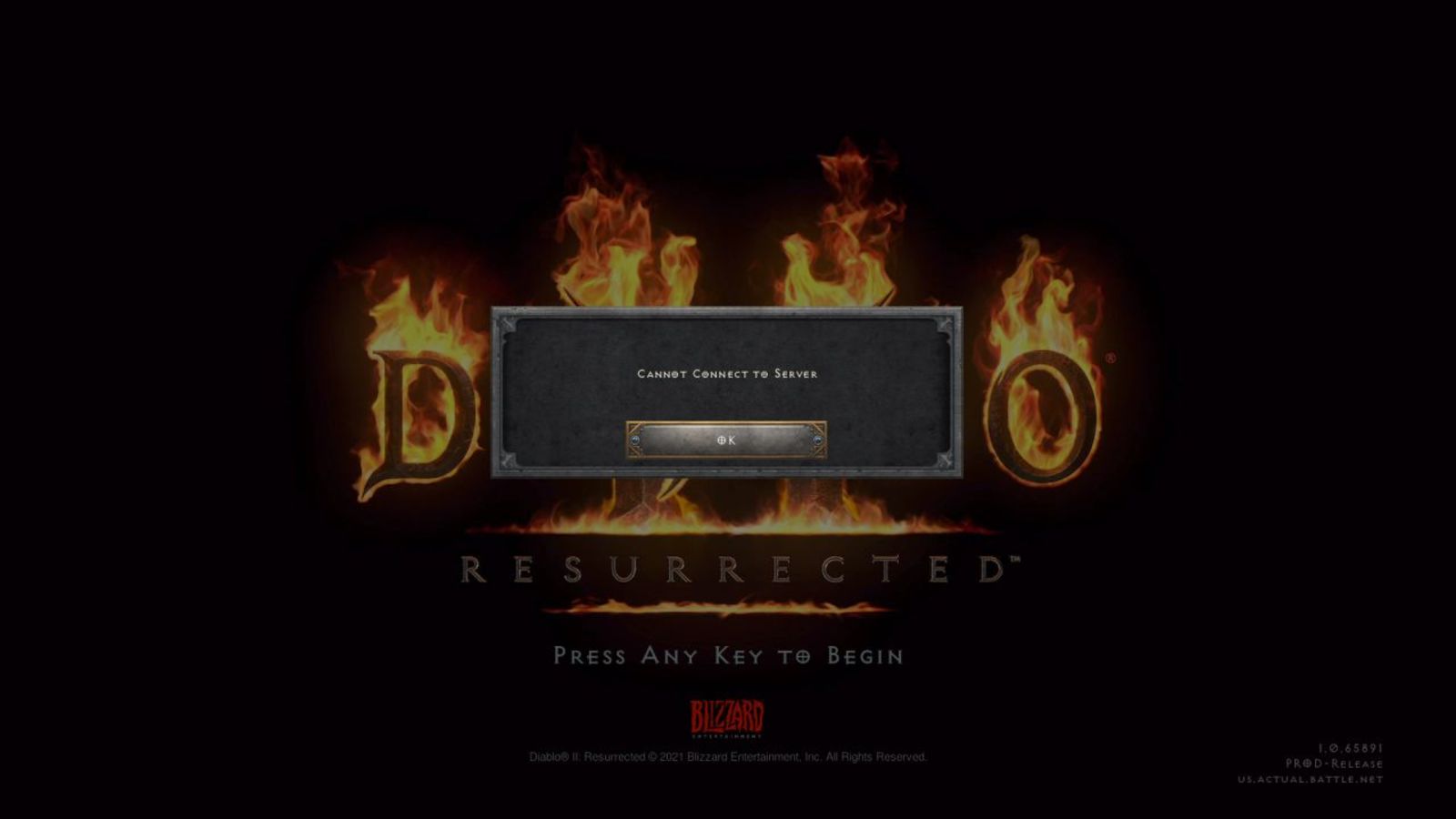
It has been some time since the release of Diablo 2 resurrected and overall reception was pretty good. People are enjoying the old classic game in hi-def. resolution and with new and improved visuals. Sadly some server issues are present still until this day and somewhat spoil the experience for players.

diablo 2 server statusThe greatest lag and server crashes are pinpointed to game-creating events. When a player creates a new online game, the server needs to pull a lot of details from the database and make a game, due to some legacy code present this process takes some time and it is demanding a bit on the server-side, and although code was optimized to cater to more modern approach some legacy code still remains.


Another thing that was spotted to affect performance itself is player behavior, to be more specific, modern gamer behavior. Where players find good builds and runs on the internet and then go to farm-specific areas or bosses for loot or experience points, which in return boils down to making plenty and short runs that are made by creating games and after run eliminating them. Now pair that with the previous statement about legacy server and database code and you can add 1 and 1 and see how this might be an issue.

A lot of short games over legacy code are placing games in a state it was not designed for back in 2001 and therefore we have issues. Sadly solutions without completely rewriting the whole code are not very promising and they include rate limiting, which will prevent players to create many games in succession in a short period of time and maybe even login queues to drop a load on servers.

Blizzard reached to people in the whole company, even old diablo 2 developers to ask for advice and they say that they are working on solutions so they could lift limitations and have everything running fine.

Do You Need Help with Your Device?

Our Team of Experts May Help
Troubleshoot.Tech Experts are There for You!
Replace damaged files
Restore performance
Free disk space
Remove Malware
Protects WEB browser
Remove Viruses
Stop PC freezing
GET HELP
Troubleshoot.Tech experts work with all versions of Microsoft Windows including Windows 11, with Android, Mac, and more.

Share this article:

You might also like

Fix Libmysql.dll is Missing Error in Windows
Libmysql.dll is missing or not found error appears in Windows when the user is trying to open and run the application. In this guide, we will offer you solutions on how to fix and remove this annoying error.
  1. Check recycle bin

    Some applications or purely by accident itself libmysql.dll gets deleted. If you have not turned recycle bin off go to it and check to see if the file is by any chance there. If you find it, right-click on it, choose restore, the error will be gone.
  2. Update drivers

    Press ⊞ WINDOWS + X to open the Windows menu and click on Device manager In device manager locate device which has alert mark next to it Right-click on it and choose update driver Reboot your computer
  3. Run SFC scan

    Press ⊞ WINDOWS + X and choose command prompt (admin) In command prompt type in sfc /scannow and press ENTER wait for the operation to complete and Reboot your system
  4. Reinstall application

    if you are getting an error only on one application or an error has started to appear after the installation of a particular application go to Windows applications, uninstall it and then install it again. There is a chance that the file has been corrupted during the installation process.
Read More
Could not find this item, no longer in path
If you were trying to copy, move modify or delete a folder or a file in your computer but you’re not able to do so and encountered an error instead that says, “Could not find this item, This is no longer located in <path>, Verify the item’s location and try again”, then you’ve come to the right place as this post will guide you on how you can fix this error. You can encounter this error when you delete, rename, open or copy a certain file which is often created by third-party software and lacks important information like file format, and so on. Although you can see these files in File Explorer, you might not be able to perform some operations in them. To fix this problem, you need to check out the given suggestions below.

Option 1 – Try to rename the file via Command Prompt

If you were trying to rename the file but unable to do so, you can achieve that by executing a command in Command Prompt. Make sure to follow the steps carefully.
  • Type in “Command Prompt” In the Start menu to search for it or you could also click the search button right next to the Start menu and then right-click on the related result and select the option “Run as administrator” to open Command Prompt with admin privileges.
  • Next, type in “cd” followed by the path where the file is located with this format – “C:/Folder1/Folder2/Folder3”. However, you have to omit the problematic file this time. To put it simply, the last folder in the command must be the folder where the file is located.
  • After inputting the command, press Enter on your keyboard and then use the set of commands given below. Note that each command is a new line so you need to tap Enter after copying each line.
    • DIR /A /X /P
    • RENAME (the current name of the problematic file) (a non-problematic name)
    • EXIT
Note: Make sure that you only input the current name and the new name separated by a space. You must not write the brackets in the command. If everything goes well, you will now be able to operate the file like you used to before.

Option 2 – Try to delete the file using Command Prompt

On the other hand, if you were trying to delete the file instead of renaming it, you can execute another command in Command Prompt.
  • Open Command Prompt with admin privileges like what you did earlier.
  • Once you’ve opened Command Prompt, copy and paste the command given below and tap Entre after you do so. You also have to make sure that you key in the correct path where the file is located as well as its name.
rd /s \?X:badfolderpath
Note: In the command above, “X” is the placeholder letter so you must input the letter that corresponds to the drive’s letter where the file is located.
  • After that, you will see the “Operation completed successfully” message on your screen. If you don’t, check if you’ve really inputted the correct location of the file or its name.

Option 3 – Delete the file without any extension

If the file you were trying to delete does not have an extension, this means that Windows does not know what to do with this file which is why it’s throwing an error message. The best thing to do in such cases is to delete the file especially if it takes up a lot of memory. To delete these kinds of files, here’s what you have to do:
  • Follow the first two steps from the previous option above so you can navigate to the location of the file accurately just be careful in inputting the folders.
  • Don’t forget to tap Enter right after each command and then use the next command below so you can delete the affected file which has no extension:
del *.*
  • After you’re done, open the File Explorer and then check if the file is now deleted or not.
Read More
Free Quake upgrade comes to Steam and more
quake remasterWithout any fanfare, news, or information Bethesda has released a completely free upgrade for legendary Quake 1. Free upgrade is automatically applied to all users who possess the original game and it has already been rolled out.

What has changed for good?

New textures, effects, and resolutions are one thing that will come first into your focus when you start the game. From the moment game is started it feels and looks like a game you remember from a long time ago. Models are also upgraded with a higher polygon count. Another thing that will hit you right away is the legendary OST by Trent Reznor in its full glory. If you have the original Quake and played it you will know that OST was missing from the Steam release and having it fully back is a great feature. I would argue that placing just OST alone in the steam release is enough for people to play it again since it adds so much atmosphere. Deathmatch and other multiplayer goodies are all here as well and there is a completely free new episode in the game with several levels. Yes, you get a free Quake upgrade in HD with an extra episode completely free.

The bad side of Quake coin

So this might come as a purist or obsessive nit-picking but there were two things that I, personally am not a fan of and have noticed during my gameplay. Please know that this is personal preference and by no other chance reflects the quality of the game itself but I just had to talk about it. Quake remake is made in a new engine and as such dynamic and gunplay feel different from the original, granted they have done the best they could to replicate the authentic feeling of the original game but there are parts of the game where I have felt that simply put, it feels different. Another thing is also tied to technology and the overall game is somewhat a little brighter and in some areas little softer in dark areas. Like I said this is purely personal preference and might come as nitpicking but I preferred the darker and grittier look of the original game. Darkplaces, the free custom-made upgrade did this in my opinion better.
Read More
Fixing error 0xc000000e in Windows 10
If you encounter a Recovery Error code 0xc000000e, “Your PC needs to be repaired” error on your Windows 10 computer, then it means that there is some hardware failure or an incorrect drive configuration. Apart from the error, it may be accompanied by different error message such as:
  • A required device is inaccessible
  • The selected entry could not be loaded
  • A required device isn’t connected or cannot be accessed
  • The selected entry could not be loaded because the application is missing or corrupt
  • The boot selection failed because a required device is inaccessible.
As mentioned, the error code 0xc000000e or STATUS_NO_SUCH_DEVICE error indicates that there is a hardware failure or an incorrect drive configuration and to fix it, you have to check your cables as well as check the drive with the diagnostic utility available from the manufacturer of the drive. And if you are using older PATA (IDE) drives, then this kind of error also indicates an incorrect master/subordinate drive configuration. There could be different causes for this error. It could be that the winload.exe file is not accessible or is corrupted or that the boot location for the operating system cannot be found. Thus, for you to boot into and access the operating system, you can try the suggestions given below.

Option 1 – Try rebuilding the Boot Configuration Data (BCD) file

  • Once you get to the Welcome Screen part, click on Next.
  • Afterward, click on the Repair your computer option located on the bottom-left part of the window.
  • Then click on Troubleshoot.
  • Next, select the Advanced Options and then Command Prompt.
  • Once Command Prompt has been pulled up, the following command to rebuild BCD files.
bootrec /rebuildbcd
  • Once the command line is successful in finding out a Windows installation, hit Y to let it boot from the list which will successfully rebuild BCD.
  • Now type “exit” to close Command Prompt and then restart your computer to successfully apply the changes made.

Option 2 – Try to run the Automatic Repair Utility

You might also want to use Automatic Repair in fixing the error code 0xC000000E. To do so, follow the steps below.
  • You can start by creating and booting from a bootable Windows 10 USB Stick.
  • After that, click on Repair your computer located in the bottom left corner when you are on the initial Windows Startup screen.
  • Next, click on Troubleshoot, and then on the other screen, click the Startup Repair option.
  • Now select the operating system you want to repair. Once you do that, it will start to repair your operating system. Wait until the process is completed and then check if the problem’s now fixed.

Option 3 – Try checking the physical device connections

You might also want to try checking if there are other devices that are connected to your PC. This is because of the configuration of the BIOS or UEFI might be configured in a way that any external device connected to the computer has a higher boot priority compared to the hard disk.  And if it’s really the case, the externally attached disk might be the drive your computer is trying to boot into and not the hard disk. In such cases, Pen Drives, USB storage devices, CDs, DVDs, and so on, are included in this category of physical device connections.

Option 4 – Try updating the BIOS

As you know, the BIOS is a sensitive part of a computer. Even though it is a software component, the functioning of the hardware depends on it largely. Thus, you must be careful when modifying something in the BIOS. So if you don’t know much about it, it’s best if you skip on this option and try the other ones instead. However, if you are well-versed in navigating the BIOS, then follow the steps below.
  • Tap the Win + R keys to open the Run dialog box.
  • Next, type “msinfo32” in the field and press Enter to open System Information.
  • From there, you should find a search field on the bottom where you have to search for the BIOS version and then press Enter.
  • After that, you should see the developer and version of the BIOS installed on your PC.
  • Go to your manufacturer’s website and then download the latest version of BIOS on your computer.
  • If you are using a laptop, make sure that you keep it plugged in until you have updated the BIOS.
  • Now double click on the downloaded file and install the new BIOS version on your computer.
  • Now restart your computer to apply the changes made.

Option 5 – Try resetting the BIOS/UEFI configuration

You might also want to reset the BIOS configuration which will lead to arranging the boot configuration since it is intended by the manufacturer. Note that this will get rid of any blockage in the boot process.

Option 6 – Try marking your Disk as Online

Marking your Disk as Online can also help in resolving the error code 0xC000000E. To do so, follow the steps below.
  • You need to first create a bootable Windows 10 Media and then boot from it.
  • After that, click on Repair your computer on the first window of the Windows 10 installation setup.
  • Now, choose the operating system partition from the options and click on Next.
  • Then select Command Prompt from the System Recovery Options box.
  • Next, type in “diskpart” and hit Enter to initiate the Diskpart utility inside the Command Prompt.
  • Now type in either “list disk” or “list volume” and hit Enter. Either of these commands will help you in listing all the Disk connects or all the partitions on those disks formed. So you have to select one command depending on the list command you entered.
  • Afterward, type in “select disk #” or “select volume #” and hit Enter to select the Disk or Partition you want to select.
  • Now type in “online disk #” or “online volume #” and press Enter to mark the disk you selected as Online.
Read More
Fixing Folder Size Issue in Windows 10
Recently, several Windows 10 users have reported an issue with the Windows folder sizes in their PCs. If you are one of these affected users, read on as this post will walk you through fixing this issue. For instance, if you have a folder with 100 GB worth of data and when checking its size using its properties, you see the wrong size instead of 100GB. The size displayed will most likely be a random number which can either be bigger or smaller than the real size of the folder. This incorrect folder size issue does not happen to any specific drive or certain kinds of folders as any folder can be affected by this incorrect folder size issue. When you try to rename the affected folder, the size will change but its size still remains to be incorrect. The root cause of this particular issue is in Windows 10 itself. It is a known bug that came along with one of the latest Windows Updates which prevents the File Explorer to accurately read the metadata of a certain folder or file and leads to displaying incorrect and unexpected file sizes and the reason why you might also notice that your drive is also not correct. Since this is brought upon by one of the recent or latest Windows Updates the good thing is that Microsoft will most likely release a fix on its next upcoming updates but until then, you will be left with no choice but to deal with an incorrect folder or file size. To remedy that, here are some suggestions you can try that might fix the problem.

Option 1 – Try using the System File Checker

The System File Checker or SFC is a built-in command utility that helps in restoring corrupted files as well as missing files. It replaces bad and corrupted system files to good system files that might be causing the incorrect folder or file size in Windows 10. To run the SFC command, follow the steps given below.
  • Tap Win + R to launch Run.
  • Type in cmd in the field and tap Enter.
  • After opening Command Prompt, type in sfc /scannow
The command will start a system scan which will take a few whiles before it finishes. Once it’s done, you could get the following results:
  1. Windows Resource Protection did not find any integrity violations.
  2. Windows Resource Protection found corrupt files and successfully repaired them.
  3. Windows Resource Protection found corrupt files but was unable to fix some of them.

Option 2 – Try resetting Windows 10

To fix the folder and file size issue, you can try resetting Windows 10. Doing so won’t get rid of any file in your system – instead of erasing all your media files and documents, this reset option resets all the system settings and files. That way, you won’t have to deal with inaccurate folders or file sizes as you browse and use your files.

Option 3 – Wait for the Windows Update

As mentioned, this is already a known issue and a lot of Windows 10 users have already complained about it to Microsoft so a bug fix will be soon released in the latest Windows Updates.
Read More
REvil vanishes over night without trace
REvilREevil is one of the most active and successful hacking groups connected to Russia and operating all over the world. The group recently demanded a huge bitcoin ransom for an attack targeting IT firm Kaseya in the USA. Since Tuesday blog and payment site run by REvil group cannot be longer reached without any kind of explanation or why. The reason behind the disappearance is unknown but has sparked speculation that the group may have been targeted deliberately by authorities. US President Joe Biden said he raised the issue with Vladimir Putin during a phone call on Friday, after discussing the subject during a summit with the Russian president in Geneva last month. Mr. Biden told reporters that he had "made it very clear to him...we expect them to act" on information and also hinted the US could take direct digital retaliation on servers used for intrusions. The timing of Tuesday's outage has sparked speculation that either the US or Russian officials may have taken action against REvil - though officials have so far declined to comment and cyber experts say sudden disappearances of groups are not necessarily uncommon. The development comes after a series of high-profile ransomware attacks which have hit major US businesses this year. The FBI accused REvil - also known as Sodinokibi - of being behind a ransomware attack on the world's largest meat processing company JBS last month.
Read More
Recover or set a BIOS or UEFI Password
If you have been using Windows for quite some time now then you’re probably aware of the BIOS or UEFI password. This password lock is the one that ensures you enter the set password even before your Windows PC boots up. However, there’s just one downside with the BIOS or UEFI password – there is no recovery option, unlike your Microsoft account. Worry not though for this post will guide you on how you can set or recover a BIOS or UEFI password on your Windows computer. The BIOS or UEFI passwords are stored at the hardware level which means that unless the OEM wants or has configured a way to recover the password, it is pretty much impossible to reset it. There are times when they are so strict that the only way to get through it by contacting customer care. Note that any Windows computer with this lock can’t be unlocked by trying to reinstall Windows. In this post, you’re going to have to remove the CMOS battery temporarily, clear unknown BIOS/UEFI passwords using the bios-PW website as well as call customer care. For more details, refer to the options provided below.

Option 1 – Remove the CMOS battery temporarily

In case you didn’t know, every motherboard comes with a CMOS battery which helps the computer system to keep the clock ticking and in making sure that the BIOS settings are not lost when the computer is powered down. Every time a computer is turned on, the CMOS battery ensures that the information is available for the computer to boot up. So when you remove the CMOS battery temporarily, say about 30 seconds or a minute, the settings will be lost. There are some motherboards that are built-in ways that when you remove the battery for long, it will reset everything including the password for the BIOS or UEFI.

Option 2 – Clear the unknown BIOS or UEFI passwords using a bios-PW website

If the first option didn’t work, you can try using this BIOS Password website at http://bios-pw.org/ to clear the password.
  • When prompted by the BIOS, enter the wrong password a couple of times as doing so will lock you out of the system.
  • After that, you will see a new number or code on the screen which will include a message about System Disabled [XXXXX] Service TAG [YYYYY].
  • Next, open the BIOS Password website and enter the XXXXX code in it and make sure to tap the Shift + Enter keys or just enter.
  • Now it will open multiple unlock keys which you can use to clear out the BIOS or UEFI lock on your Windows PC.

Option 3 – Call the customer care

If the second option still didn’t work, you have to call customer care and follow their suggestions for they will walk you through fixing the problem using the service tag or might suggest that you visit a service center to make things easier for you. Note: You also have the option to set a BIOS or UEFI password. Although it isn’t recommended, you still can do it if you really want to. Remember that the BIOS or UEFI interface varies from OEM to OEM so you must find something related to either PASSWORD or SECURITY. You will have the following similar options:
  • Supervisor password – it’s the same as the master password that can change important system settings.
  • User password – with this password, any user can change minor settings.
  • Master password – you can use this password for a hard drive or as a general password.
There are several OEMs that offer micro-control where you have to enter the BIOS password. For instance, you’ll have the option to skip for a normal restart, or when you select a boot device while you might have to enter the password for unattended reboots or when your PC is powered on, etc. And if you are here to remove the password, you need to find a remove password option in the same section. You will be prompted to enter the set password once and if it’s correct, it will remove the BIOS password. After that, you have to save and exit the BIOS then restart your computer and check if the settings are properly applied.
Read More
Fix Windows Update Install Error 0x80070005
If you are checking for an update on your Windows 10 PC and you got the error 0x80070005 due to some ACCESS DENIED permissions issue, then read on as this post will show you what you can do to fix the problem. For some reason, the Windows Update does not have enough rights or permissions to continue further which is why you’re getting an error instead. Thus, the first thing you can do before you troubleshoot further is to make sure that you’re logged in as admin. However, if you’re already logged in as one, then here are some suggestions that might help you fix the Windows Update Install Error 0x80070005.

Option 1 – Restart your computer and try installing the Updates again

You can restart your computer and then try installing the updates once again. There are instances when a simple restart resolves Windows Update errors. Thus, after you restart your computer, check for updates once again and see if you’re still getting the error or not.

Option 2 – Delete the contents in the Software Distribution folder and Catroot2 folder

  • Open the WinX Menu.
  • From there, open Command Prompt as admin.
  • Then type in the following command – don’t forget to hit Enter right after typing each one of them.
net stop wuauserv net start cryptSvc net start bits net start msiserver
  • After entering these commands, it will stop the Windows Update Service, Background Intelligent Transfer Service (BITS), Cryptographic, and the MSI Installer
  • Next, go to the C:/Windows/SoftwareDistribution folder and get rid of all the folders and files thereby tapping the Ctrl + A keys to select them all and then click on Delete. Note that if the files are in use, you won’t be able to delete them.
After resetting the SoftwareDistribution folder, you need to reset the Catroot2 folder to restart the services you just stopped. To do that, follow these steps:
  • Type each one of the following commands.
net start wuauserv net start cryptSvc net start bits net start msiserver
  • After that, exit Command Prompt and restart your computer, and then try to run Windows Update once more.

Option 3 – Try running the Windows Update Troubleshooter

Running the built-in Windows Update troubleshooter is one of the things you can first check out as it is known to automatically resolve any Windows Update errors like error 0x80070005. To run it, go to Settings and then select Troubleshoot from the options. From there, click on Windows Update and then click the “Run the troubleshooter” button. After that, follow the next on-screen instructions and you should be good to go.

Option 4 – Take control of the User App Data

There are times when permission to access the files is not configured correctly. As a result, it blocks the downloading of the updates. Thus, you have to take full control of the User App Data which is placed at C:/Users/USERNAME/AppData.
  • First, go to C:/Users/USERNAME/AppData and right-click on it then select Properties.
  • Next, click on the Edit button in the Properties window and click OK to confirm if you got a User Account Control elevation request.
  • After that, select user/group from the permission windows or click on the Add button to add another user or group. It would be best if you add “Everyone” to give permission.
  • Then check “Full Control” under the “Allow” column to assign full access rights control permissions.
  • Now edit the permission to Full Control for “Everyone”.
  • Click OK to save the changes made and then exit.

Option 5 – Try to update Windows after a couple of minutes or an hour

There are times when the issue is from Microsoft’s end. It could be that there’s some issue with Microsoft’s server so it would be better if you give it a couple of minutes or an hour or so before trying to run Windows Update again.
Read More
RebateInformer Hijacker removal guide for windows

RebateInformer is a browser extension for Google Chrome. This extension monitors the web pages the user is visiting and checks against an affiliate database for various rebates and coupons related to the context of the products being shown in the browser.

This extension analyzes websites your browser visits and attempts to find deals associated with the merchant’s product offerings. If an offer is found, it is injected into the deals page even if it's sold by a different merchant at a higher price. Several anti-virus scanners have marked this extension as Potentially Unwanted, and due to its data mining behavior, it is not recommended to keep it on your computer.

About Browser Hijackers

Browser hijacking is regarded as the web’s constant problem that targets web browsers. It is a type of malicious software that alters your web browser’s settings and redirects you to sites or webpages that you had no intention of visiting. Browser hijacker malware is created for numerous reasons. It redirects you to the sponsored sites and injects adverts on your internet browser that helps its creator generate ad revenue. It could seem naive, but the majority of these websites are not legitimate and may pose a serious threat to your online safety. Additionally, hijackers can make the whole infected system fragile – other dangerous malware and viruses will use these opportunities to intrude into your computer system effortlessly.

Browser hijacking symptoms

There are many different symptoms that indicate the web browser has been highjacked: your browser’s home page is suddenly different; new bookmarks pointing to porn websites are added to your bookmarks; the default internet search engine and the default browser settings are modified; unsolicited new toolbars are added to your browser; numerous pop-up adverts show up and/or your browser pop-up blocker is disabled; your web browser starts running slowly or displays frequent errors; you’re blocked to access the websites of computer security solution providers.

How browser hijacker infects computers

There are several ways your PC could become infected with a browser hijacker. They usually arrive through spam e-mail, via file-sharing networks, or by a drive-by-download. They also come from add-on applications, also called browser helper objects (BHO), browser extensions or toolbars. Sometimes you may have inadvertently accepted a browser hijacker as part of an application package (generally freeware or shareware). An example of some notorious browser hijacker includes Conduit, Anyprotect, Babylon, DefaultTab, SweetPage, Delta Search, and RocketTab, however, the names are continually changing. Browser hijackers could record user keystrokes to collect potentially valuable information that leads to privacy concerns, cause instability on systems, drastically disrupt the user experience, and eventually slow down the computer to a point where it becomes unusable.

Browser hijacker removal

Some browser hijacking can be simply stopped by finding and removing the corresponding malware software through your control panel. Unfortunately, many of the software packages utilized to hijack a web browser are deliberately built to be hard to detect or remove. Furthermore, manual removals require in-depth system knowledge and thus could be a very difficult job for novice computer users. Professionals always suggest users remove any malicious software including browser hijacker by using an automatic malware removal tool, which is better, safer, and quicker than the manual removal technique. Safebytes Anti-Malware features a state-of-the-art anti-malware engine to help you prevent browser hijacker infection in the first place, and mop up any existing problems. And employ a PC optimizer to erase all associated files in the registry and fix browser problems.

Can’t Install Safebytes Anti-malware due to the presence of a Virus? Try This!

Malware can cause all sorts of damage once they invade your system, from stealing your personal information to deleting data files on your computer. Some malware sits in between the computer and the net connection and blocks a few or all internet sites that you would like to visit. It could also block you from the installation of anything on your system, especially the anti-malware program. If you’re reading this right now, you’ve perhaps recognized that a malware infection is the real cause of your blocked web traffic. So how to proceed when you want to install an anti-virus application such as Safebytes? Refer to the instructions below to eliminate malware by alternate methods.

Download the software in Safe Mode with Networking

In Safe Mode, you can actually modify Windows settings, uninstall or install some applications, and get rid of hard-to-delete viruses. If the malware is set to load automatically when the computer boots, shifting into this mode may prevent it from doing so. In order to enter into Safe Mode or Safe Mode with Networking, press F8 while the computer is booting up or run MSConfig and find the “Safe Boot” options under the “Boot” tab. As soon as you reboot into Safe Mode with Networking, you could download, install, and update the anti-malware program from there. After installation, run the malware scanner to remove standard infections.

Obtain the anti-malware software using an alternate web browser

Web-based malware can be environment-specific, targeting a particular web browser or attacking specific versions of the web browser. The ideal solution to avoid this issue is to choose a browser that is renowned for its security measures. Firefox contains built-in Malware and Phishing Protection to keep you secure online.

Install anti-malware on a thumb drive

Here’s another solution which is using a portable USB antivirus software that can check your system for malicious software without needing installation. Do these simple steps to clean up your infected PC by using a portable antivirus. 1) Download Safebytes Anti-Malware or MS Windows Defender Offline onto a virus-free computer. 2) Connect the USB flash drive to a USB port on the clean computer. 3) Double-click the Setup icon of the anti-malware program to run the Installation Wizard. 4) Choose the drive letter of the flash drive as the place when the wizard asks you where you want to install the antivirus. Follow activation instructions. 5) Transfer the USB drive from the uninfected computer to the infected PC. 6) Double-click the anti-malware program EXE file on the USB flash drive. 7) Hit the “Scan Now” button to begin the virus scan.

Review of SafeBytes Anti-Malware

These days, an anti-malware program can protect your computer or laptop from different types of internet threats. But how to select the right one amongst various malware protection application that’s available in the market? You may be aware, there are numerous anti-malware companies and tools for you to consider. A few are very good ones, some are ok types, and some are simply just bogus anti-malware programs that can damage your PC themselves! You need to be very careful not to pick the wrong application, particularly if you purchase a premium application. With regards to commercial antimalware tool options, many people go with popular brands, such as SafeBytes, and are quite happy with it. SafeBytes anti-malware is a reliable tool that not only protects your PC permanently but is also quite user-friendly for people of all skill levels. With its most advanced virus detection and repair technology, this software will help you protect your personal computer against infections brought on by different types of malware and other internet threats, including spyware, adware, trojans, worms, computer viruses, keyloggers, potentially unwanted program (PUPs), and ransomware. SafeBytes has got a plethora of features that can help you protect your computer from malware attacks and damage. Here are some typical features found in this application: Real-time Protection: SafeBytes provides round-the-clock protection for your computer restricting malware intrusions instantly. It will check your PC for suspicious activity regularly and its unparalleled firewall guards your PC against illegal entry by the outside world. Robust, Anti-malware Protection: This deep-cleaning anti-malware software goes much deeper than most antivirus tools to clean your personal computer. Its critically acclaimed virus engine detects and disables hard-to-remove malware that conceals deep inside your PC. Safe Web Browsing: Safebytes assigns all sites a unique safety rating that helps you to get an idea of whether the webpage you’re just about to visit is safe to view or known to be a phishing site. Low CPU Usage: SafeBytes is really a lightweight tool. It consumes a very small amount of processing power as it runs in the background so you won’t notice any system performance issues. 24/7 Online Support: Expert technicians are at your disposal 24/7! They will quickly fix any technical issues you may be experiencing with your security software. To sum it up, SafeBytes Anti-Malware offers superb protection combined with an acceptable low system resources usage with great malware detection and prevention. You now may know that this particular tool does more than just scan and delete threats on your computer. So if you are looking for the best anti-malware subscription for your Windows-based PC, we strongly recommend the SafeBytes Anti-Malware tool.

Technical Details and Manual Removal (Advanced Users)

If you do not wish to use malware removal software and prefer to get rid of RebateInformer manually, you may do so by going to the Add/Remove Programs menu in the Control Panel and removing the offending software; in cases of browser plug-ins, you can uninstall it by visiting the browsers Add-on/Extension manager. You will definitely also want to reset your browser. Lastly, check your hard drive for all of the following and clean your registry manually to get rid of leftover application entries following an uninstallation. However, this can be a difficult task and only computer professionals could perform it safely. Also, some malware is capable of replicating itself or preventing deletion. It is highly recommended that you carry out the removal process in Windows Safe Mode.
Files: Search and Delete: baddomaindb.dat domaindb.dat chrRebateInformerSetup.exe RebateBlast.com.url RebateInformer.lnk Help.url RebateBlast.com.url RebateInformer.lnk Settings.lnk Uninstall RebateInformer.lnk npUniPlugin.dll RebateI.dll RebateInf.exe unins000.dat unins000.exe Folders: %APPDATA%\RebateInformer\ %PROGRAMS%\Inbox.com Toolbar\ %PROGRAMS%\RebateInformer\ %PROGRAMFILES%\Inbox.com\ %PROGRAMFILES%\RebateInformer\ Registry: key HKEY_LOCAL_MACHINE\SOFTWARE\CToolbar\PlugIns\REBATEINF key HKEY_LOCAL_MACHINE\SOFTWARE\Rebate Informer key HKEY_CURRENT_USER\SOFTWARE\CToolbar\PlugIns\REBATEINF key HKCU\Software\CToolbar key HKLM\SOFTWARE\CToolbar key HKCU\Software\Microsoft\Windows\CurrentVersion\Explorer\FileExts\.crdownload key HKLM\SOFTWARE\Microsoft\Windows\CurrentVersion\Uninstall\4EF645BD-65B0-4F98-AD56-D0437B7045F6_is1 key HKLM\SOFTWARE\Microsoft\Windows\CurrentVersion\Uninstall\CToolbar_UNINSTALL key HKLM\SOFTWARE\Microsoft\Windows\CurrentVersion\Installer\UserData\Crawler key HKLM\SOFTWARE\Microsoft\Windows\CurrentVersion\Explorer\Browser Helper Objects\CCB69577-088B-4004-9ED8-FF5BCC83A039 key HKLM\SOFTWARE\Classes\RebateInf.RebateInfObj key HKLM\SOFTWARE\Classes\RebateI.RebateInformImageGen key HKLM\SOFTWARE\Classes\RebateI.Rebate Informer BHO key HKLM\SOFTWARE\Classes\CToolbar.TB4Server key HKLM\SOFTWARE\Classes\CToolbar.TB4Script key HKLM\SOFTWARE\Classes\ctbcommon.Buttons key HKLM\SOFTWARE\Classes\CToolbar.TB4Client key HKLM\SOFTWARE\Classes\CShared.TB4Server2 key HKLM\SOFTWARE\Classes\CShared.TB4Server key HKLM\SOFTWARE\Classes\CShared.TB4Script key HKLM\SOFTWARE\Classes\CShared.TB4Client key HKLM\SOFTWARE\Classes\TypeLib\E79BB61D-7F1A-41DF-8AD0-402795E3B566 key HKLM\SOFTWARE\Classes\TypeLib\506F578A-91E1-46CE-830F-E2F4268E9966 key HKLM\SOFTWARE\Classes\TypeLib\438B047C-C041-4D15-98CF-A97C6B366C28 key HKLM\SOFTWARE\Classes\PROTOCOLS\Handler\rebinfo key HKLM\SOFTWARE\Classes\Interface\E9BBD270-4B87-4EE2-912F-6635674986C0 key HKLM\SOFTWARE\Classes\Interface\B3BA5582-79A9-464D-A7FA-711C5888C6E9 key HKLM\SOFTWARE\Classes\Interface\604EA016-1EDE-41E6-A23E-76CF8F2A4808 key HKLM\SOFTWARE\Classes\Interface\41349826-5C7F-4BF0-8279-5DAF1DE6E9AE key HKLM\SOFTWARE\Classes\Interface\01C78433-6FDF-4E5A-A82D-B535C32E03DF key HKLM\SOFTWARE\Classes\CLSID\EFB46ED3-8FD8-4051-8FD6-DD9CE7E63BEF key HKLM\SOFTWARE\Classes\CLSID\DB35C569-5624-4CFC-8043-E5139F55A073 key HKLM\SOFTWARE\Classes\CLSID\CCB69577-088B-4004-9ED8-FF5BCC83A039 key HKLM\SOFTWARE\Classes\CLSID\AF808758-C780-404C-A4EE-4526323FD9B6 key HKLM\SOFTWARE\Classes\CLSID\8736C681-37A0-40C6-A0F0-4C083409151C key HKLM\SOFTWARE\Classes\CLSID\54ECA872-DB2A-4C6B-BBB2-F3777C6786CC key HKLM\SOFTWARE\Classes\CLSID\4EF645BD-65B0-4F98-AD56-D0437B7045F6 key HKLM\SOFTWARE\Classes\CLSID\1DDA201E-5B42-4352-933E-21A92B297E3B key HKLM\SOFTWARE\Classes\CLSID\183643C8-EE67-4574-9A38-927852E34163 Value [HKEY_CURRENT_USER\Software\Mozilla\Firefox\Extensions][email protected]=[%PROGRAM_FILES%]\REBATE~1\Firefox\ Value [HKEY_CURRENT_USER\SOFTWARE\Microsoft\Windows\CurrentVersion\Run]RebateInformer=[%PROGRAM_FILES%]\REBATE~1\REBATE~1.EXE /STARTUP Value [HKEY_CURRENT_USER\Software\Mozilla\Firefox\Extensions][email protected]=[%PROGRAM_FILES%]\RebateInformer\Firefox\ Value [HKEY_CURRENT_USER\SOFTWARE\Microsoft\Windows\CurrentVersion\Run]RebateInformer=[%PROGRAM_FILES%]\RebateInformer\RebateInf.exe /STARTUP
Read More
Change Keyboard Repeat Rate and Repeat Delay
In case you don’t know, Windows 10 actually allows users to set the Keyboard Repeat Rate and Repeat Delay. Both of these terms are interrelated and when you make active, any text field or an editor and then press and hold a single character key, it will quickly type the character for the first time and will show delay until the second and later characters appear. This is what you call the Keyboard Repeat Delay. On the other hand, the rate at which the later character appears is known as Keyboard Repeat Rate. There are two ways you can set the Keyboard Repeat Rate and the Keyboard Repeat Delay on Windows 10. The first one is using the Keyboard Properties while the second one is using the Registry Editor.

Option 1 – Set up Keyboard Repeat Rate and Repeat Delay via Keyboard Properties

  • First, tap the Win + R keys to open the Run dialog box and type in “control keyboard” in the field, and hit Enter to open the Keyboard Properties.
  • From there, you can use the slider to make the respective options for both Keyboard Repeat Delay and Repeat Rate shorter or whatever you prefer them to be.
  • You should also see a text field in the mini window where you can test out your preferences. Once done, click on the Apply and OK buttons to save the changes made.

Option 2 – Keyboard Repeat Rate and Repeat Delay via Registry Editor

  • Tap the Win + R keys to open the Run utility and type “Regedit” in the field and then hit Enter to open the Registry Editor.
  • Next, navigate to this registry path: HKEY_CURRENT_USERControl PanelAccessibilityKeyboard Response
  • From there, you can set your own value for both the AutoRepeatDelay and AutoRepeatRate registry keys so that you can set the Keyboard Repeat Rate and Repeat Delay in Windows 10.
  • Once you’re done, exit the Registry Editor and restart your computer to save the changes made.
Read More
1 2 3 171
Logo
Copyright © 2023, ErrorTools. All Rights Reserved
Trademark: Microsoft Windows logos are registered trademarks of Microsoft. Disclaimer: ErrorTools.com is not affiliated with Microsoft, nor claims direct affiliation.
The information on this page is provided for information purposes only.
DMCA.com Protection Status